What exactly the drink does in the body during exertion
During exertion you lose two things at once: fluids with electrolytes (through sweating and breathing) and muscle and liver glycogen, the main fuel of the working muscles. After crossing a certain threshold, usually 60 to 90 minutes of intense exertion, faster in heat, the effects begin: capacity drops, perceived fatigue rises, thermoregulation worsens, cramps or stomach discomfort may appear.
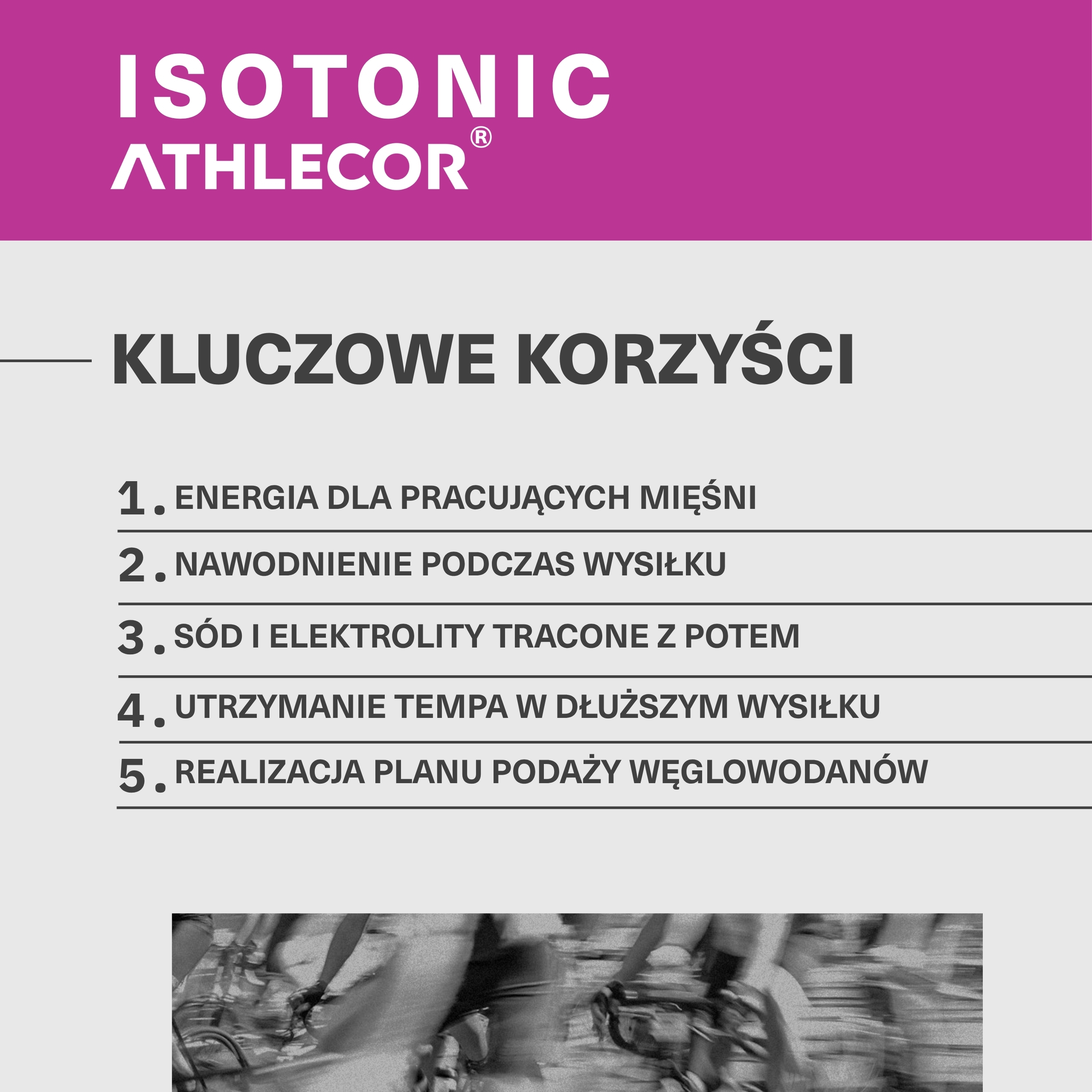
Water alone hydrates but doesn't deliver fuel. Gels and bars give fuel but require separate planning and aren't always convenient to match to hydration needs. The isotonic combines both functions in one bottle: in one serving you get fluid, electrolytes and carbohydrates in a ratio that doesn't build up in the stomach and doesn't worsen absorption.
Why osmolality 280 mOsm/kg matters
Osmolality is a measure of the concentration of dissolved particles in a fluid. The body's fluids, namely blood and lymph, have an osmolality of around 280 to 300 mOsm/kg. Drinks with the same osmolality are isotonic and have a key property: they don't draw water into or out of the intestine, that is they absorb efficiently without worsening hydration
Hypotonic drinks (below 270 mOsm/kg) hydrate better but deliver less energy.
Isotonic drinks (270 to 300 mOsm/kg) optimally balance hydration and energy delivery.
Hypertonic drinks (above 320 mOsm/kg) build up in the stomach and hold water in the intestine instead of letting it absorb into the blood. The effect is worse hydration and more frequent gut symptoms during exertion.
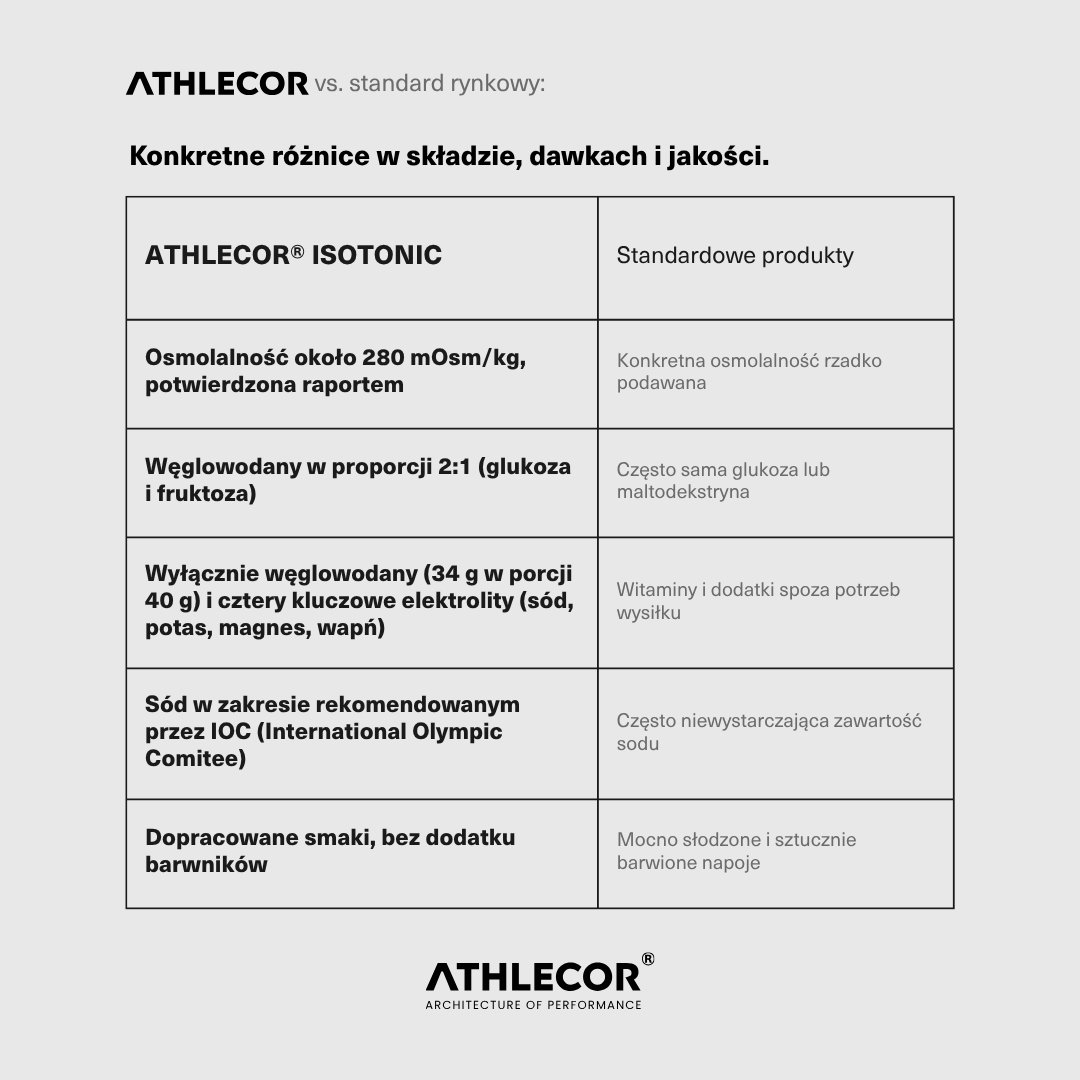
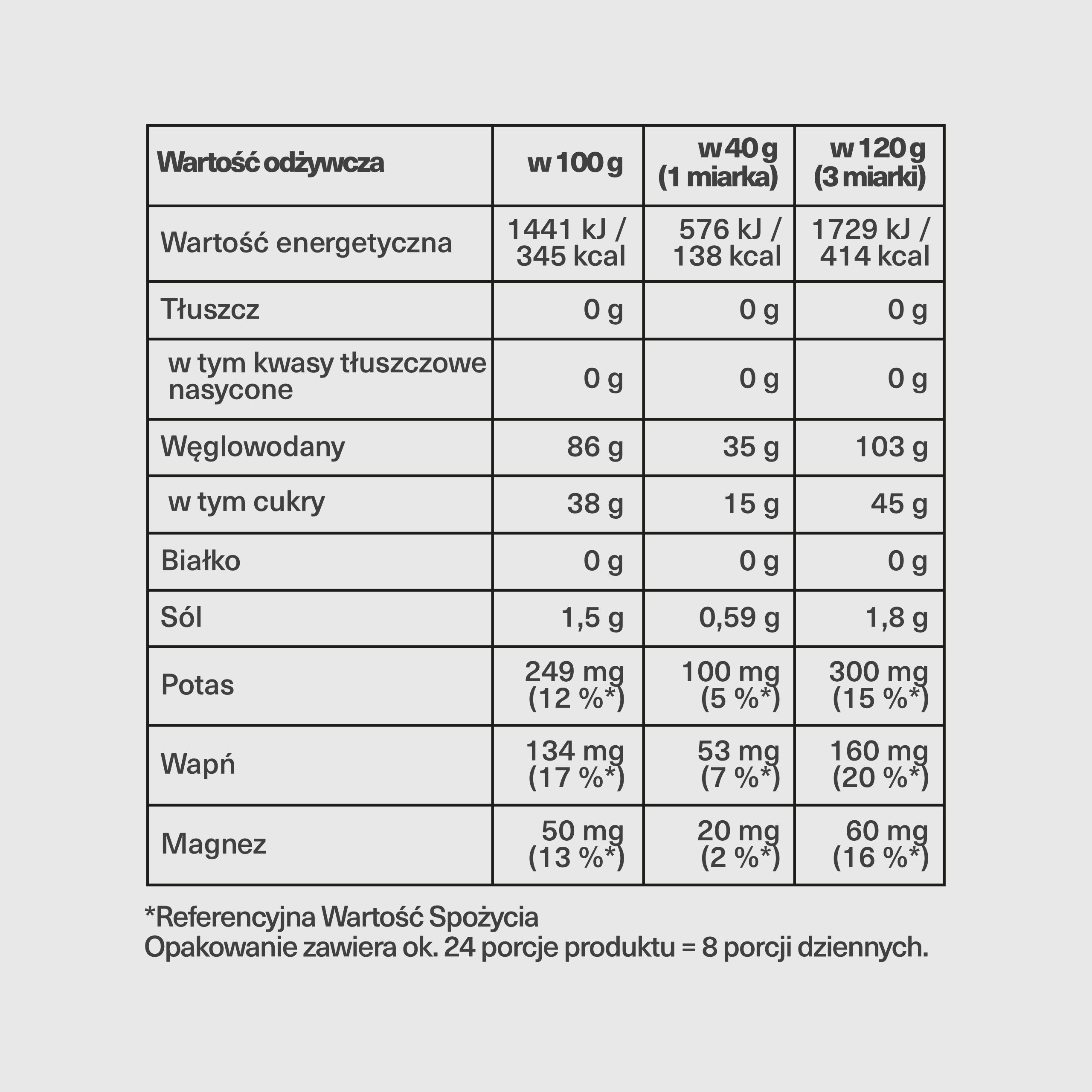
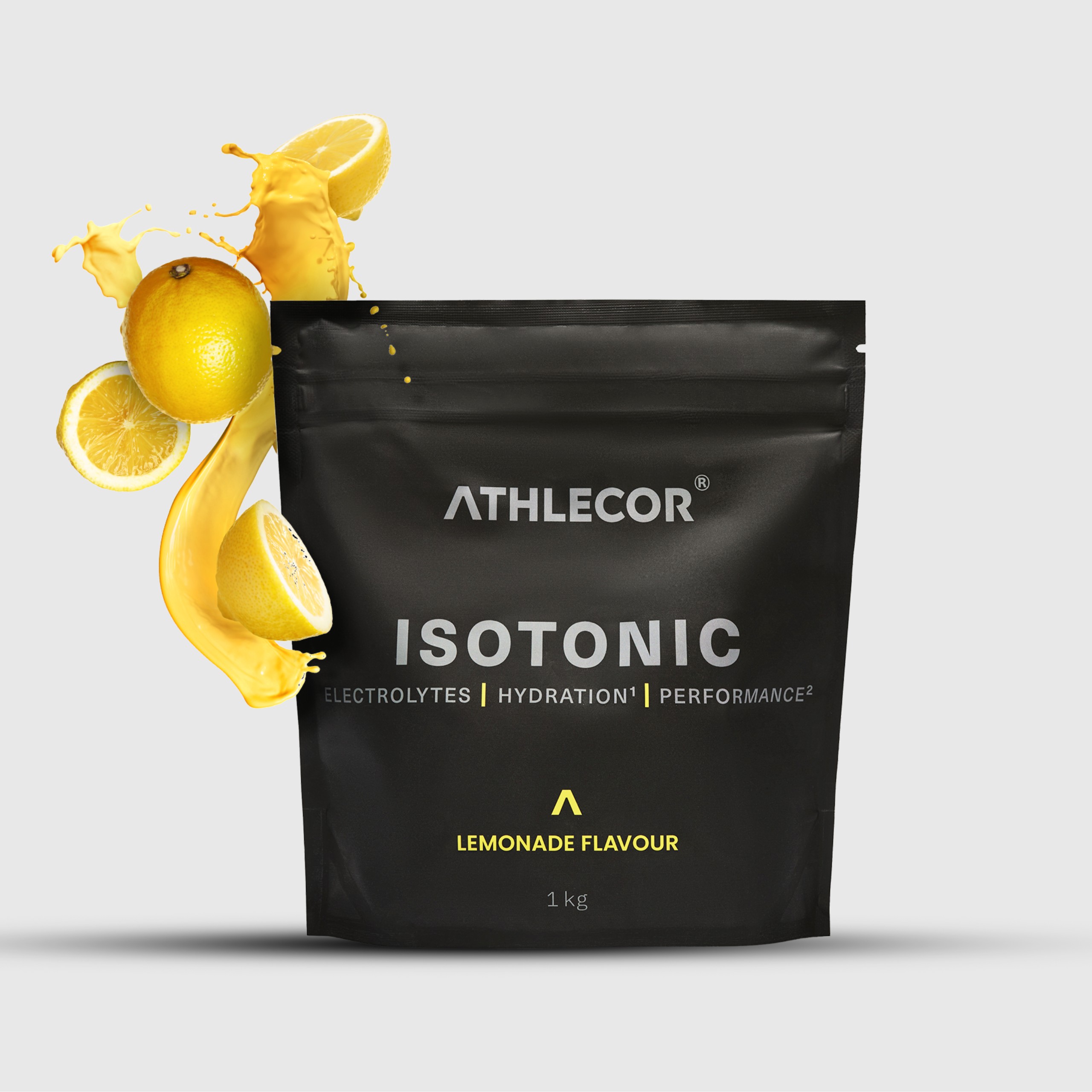
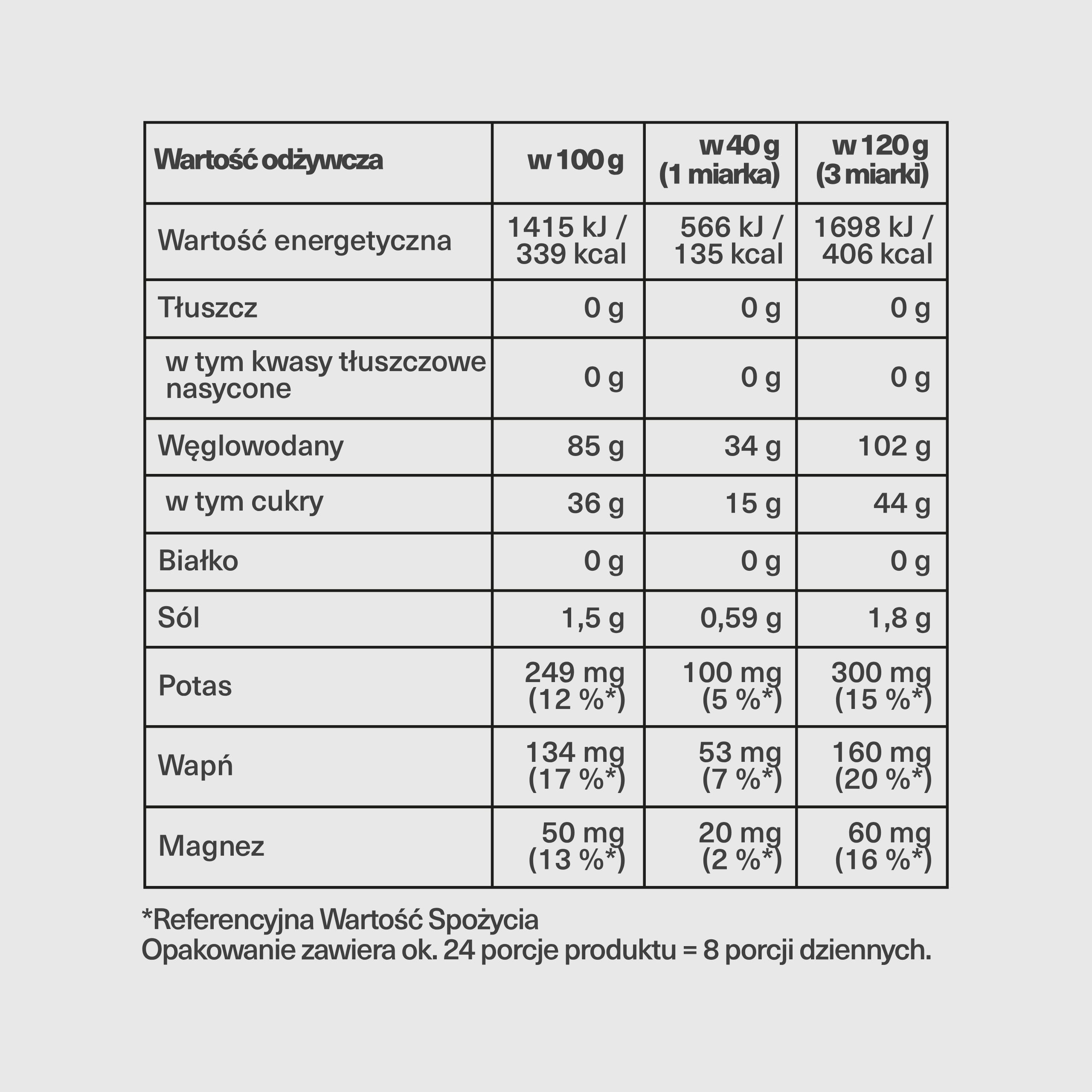
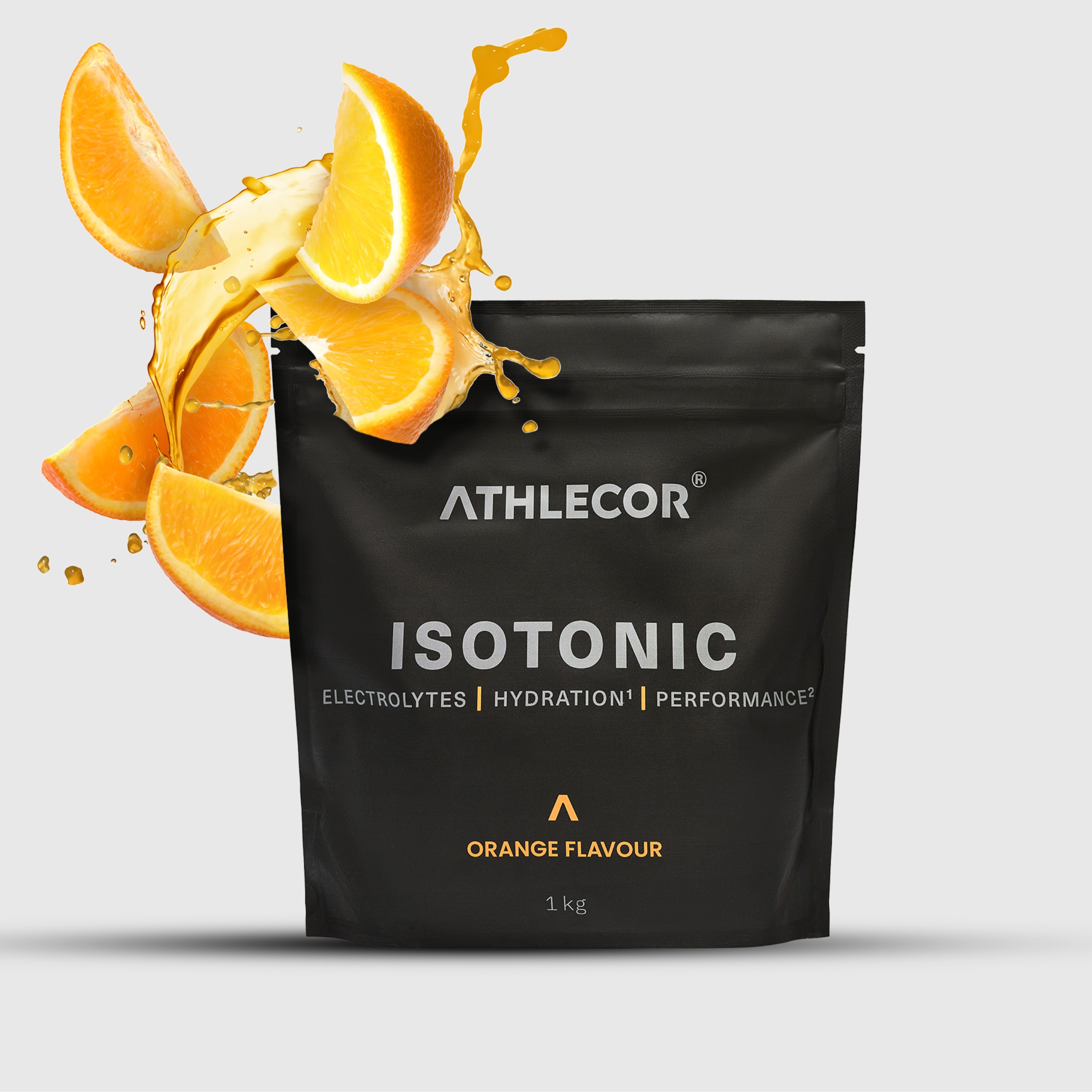
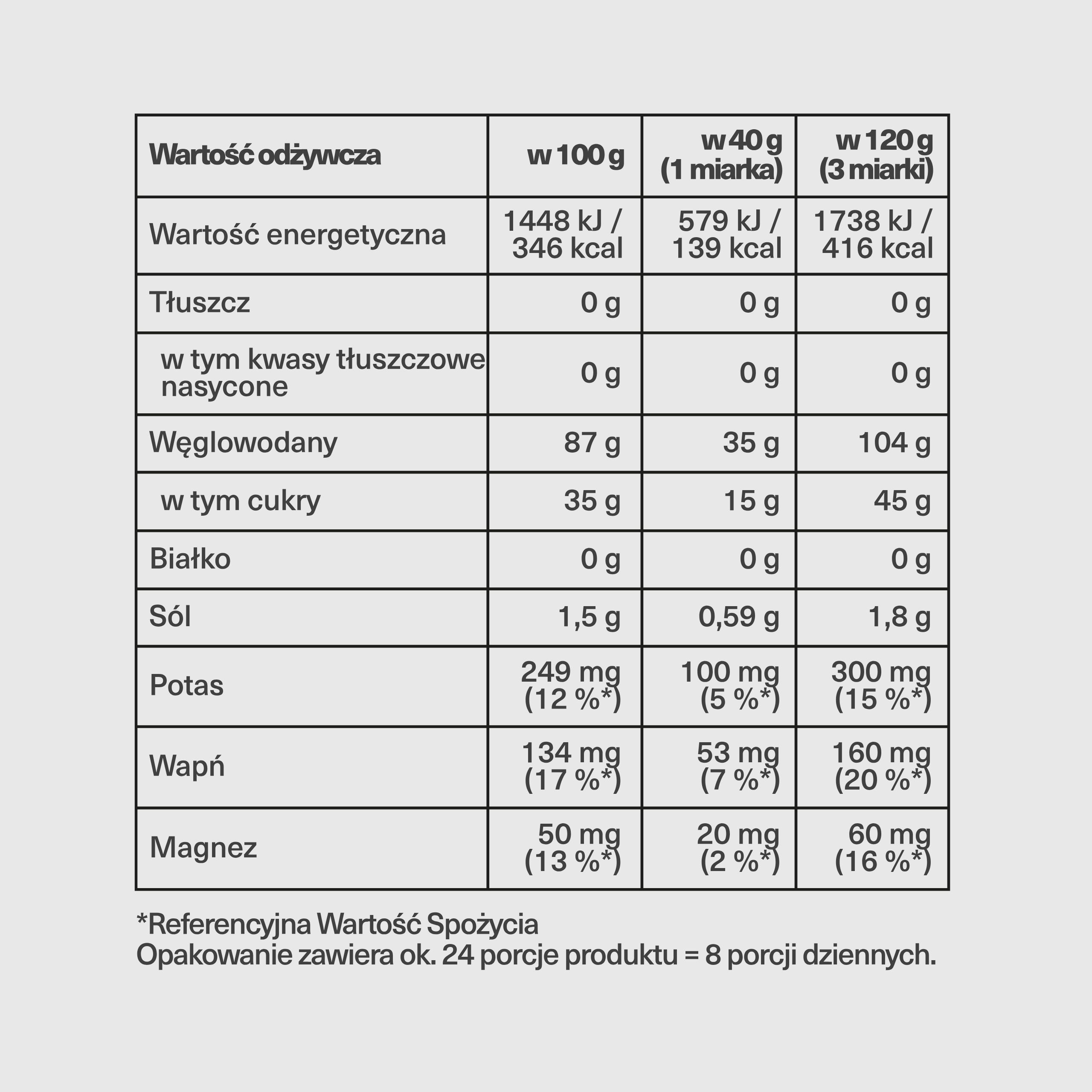
Athlecor Isotonic at the standard dilution (40 g per 500 ml) has an osmolality of around 280 mOsm/kg, that is exactly in the middle of the isotonic range.
What research shows on 2:1 blends in the context of sport
The 2:1 glucose:fructose blend works because it gets around the limit of a single transporter in the gut. In studies on cyclists comparing different carbohydrate setups, the 2:1 blend improved capacity by around 8% relative to glucose alone and 19.5% relative to water in prolonged exertion.
In the Stellingwerff and Cox meta-analysis (2014), covering 61 studies on carbohydrate intake during exertion, the mean improvement in results grows with the duration of the activity:
2.6% in efforts under 1 hour.
4.9% in efforts of 1 to 2 hours.
6.2% in efforts over 2 hours.
The longer the exertion lasts, the greater the significance of planned carbohydrate and electrolyte intake.
On electrolytes, the IOC in its 2018 and 2023 position statements recommends 0.5 to 0.7 g of sodium per litre of drink for efforts lasting over an hour, especially in high temperatures. For very long starts (over 3 hours) or in people prone to cramps, the range can be raised to 0.7 to 1.0 g/l.
Three practical conclusions worth knowing
The isotonic is a tool for exertion, not a drink for everyday drinking. The carbohydrates in it are designed as fuel for working muscles. Outside training they deliver calories that the body doesn't need at that moment for work, so they lose their function.
For short efforts (up to 45 to 60 minutes), plain water is usually enough. The isotonic has its greatest advantage above an hour of exertion, in heat, with heavy sweating, or in a training block in which sessions build up a glycogen deficit.
Gut training can't be skipped. If you're planning doses of 60 g of carbohydrates per hour or more for a race, test them beforehand in training with the same products, at the same concentration and the same time of day as the planned start. The standard rule: the last 6 to 8 weeks before the target start are the moment when the digestive system learns to tolerate the full dose. Race day isn't a good moment for the first experiments with the isotonic.