
Podstawy

★★★★★
★★★★★
5.0 (4 opinii)

Opinie o produkcie (5.0)

Jacek Z
Opinia zweryfikowana

W porownaniu z konkurencja to cenowo wypada naprawde spoko, zależało mi na wysokiej podaży epa/dha; ale tak zeby nie polykac nie wiadomo ile tych kapsulek.

Ernest Malinowski
Opinia zweryfikowana

Kupię ponownie - super cena jak za takie epa/dha

Asia
Opinia zweryfikowana

Bdb produkt

Jakub Skalimierski
Opinia zweryfikowana

Super wykonanie produktu, dwie plomby zabezpieczające. Nie odbija się rybą po połknięciu kapsułek.

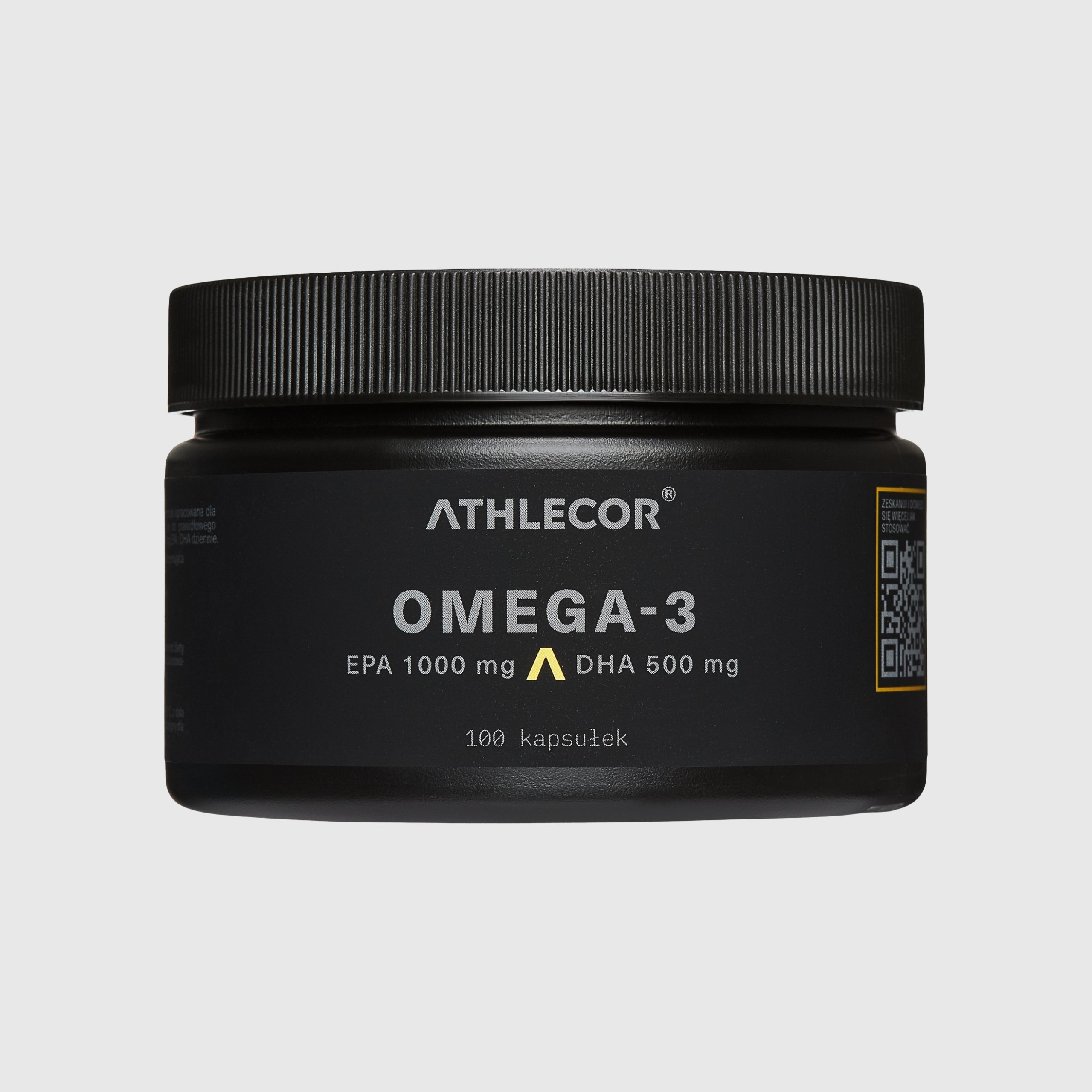
OMEGA-3. FATTY ACIDS

100 SOFTGEL CAPSULES · 50 DAYS OF USE · 1000 MG EPA + 500 MG DHA PER DAILY SERVING

Olej rybi dla sportowców w formie triglicerydowej, z realną dawką 1000 mg EPA i 500 mg DHA w dwóch kapsułkach.

Najważniejsze, co daje Ci porcja dzienna:

  • Szybsza regeneracja: EPA i DHA wpływają na markery uszkodzenia mięśni i bolesność powysiłkową, czyli pomagają wrócić do formy po ciężkich sesjach, interwałach i treningu ekscentrycznym.
  • Realna dawka, bez garści kapsułek: dwie kapsułki pokrywają zakres rekomendowany dla osób aktywnych, 1-2 g EPA i DHA dziennie, pełna porcja zamiast łykania pięciu tabletek.
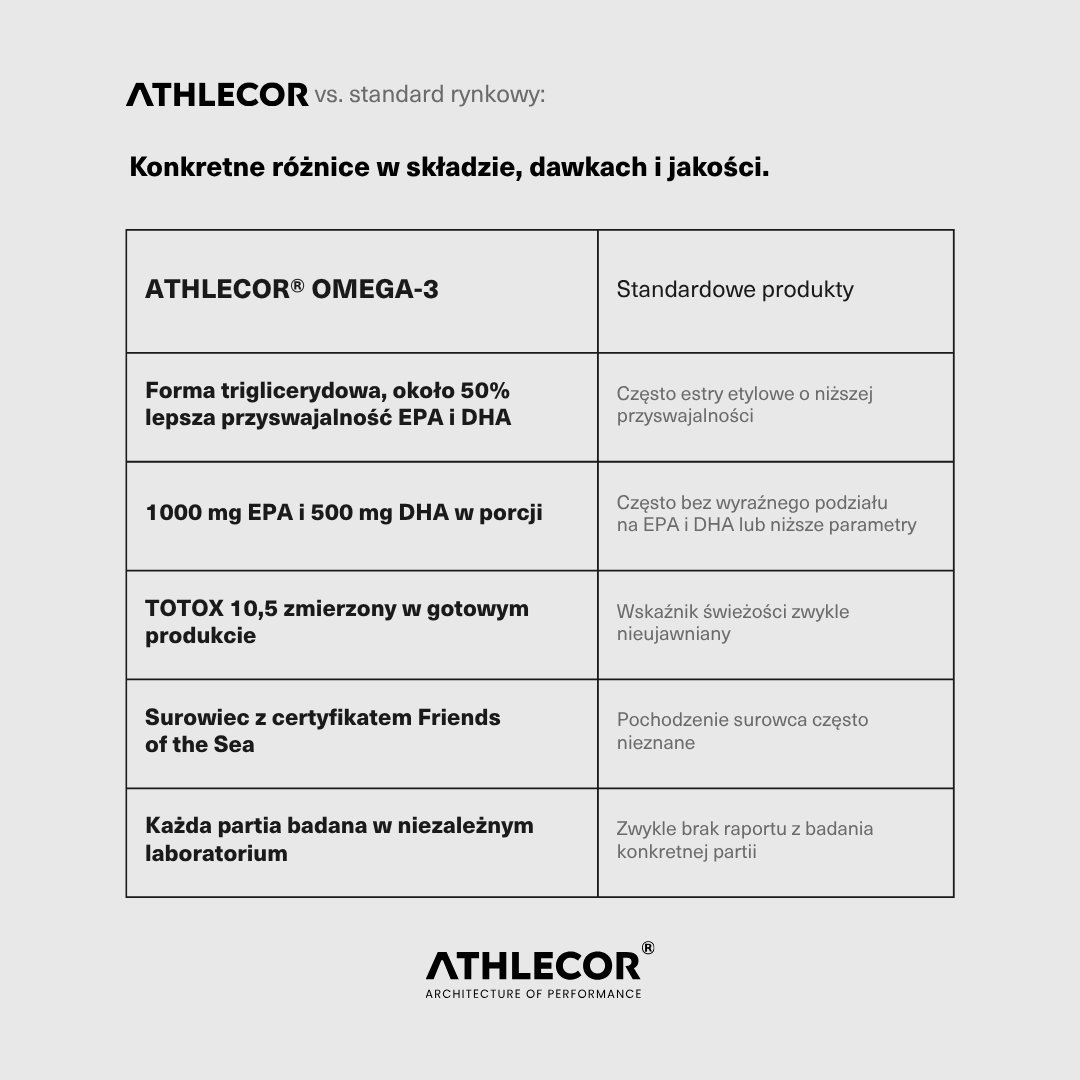
  • Świeżość mierzona w gotowym produkcie: TOTOX 10,5, mniej niż połowa limitu standardu GOED, świeży olej działa lepiej i nie odbija się rybą.
  • Lepsze wchłanianie, forma triglicerydowa: EPA i DHA w formie TG przyswajają się o około 50% lepiej niż tańsze estry etylowe, więcej z każdej kapsułki trafia tam, gdzie ma działać.

Sprawdzi się, gdy trenujesz intensywnie, rzadko jadasz tłuste ryby albo wracasz do formy po urazie. 100 kapsułek softgel starcza na blisko 2 miesiące przy 2 kapsułkach dziennie, surowiec ma certyfikat Friends of the Sea, a wyniki badań każdej partii są na stronie.

One-time purchase

99,00 

Free delivery within POLAND from 290 zł

DELIVERY VIA INPOST OR DPD

Zamów w ciągu 4 h i 39 minut — wyślemy dziś o 16:00.

ATHLECOR® OMEGA-3 TEST RESULTS

At ATHLECOR we are committed to transparency and safety. That is why every product batch is tested in independent external laboratories.

BATCH NUMBER

PRODUCTION DATE

REPORT

AC-1.2-2602-01

04.03.2026

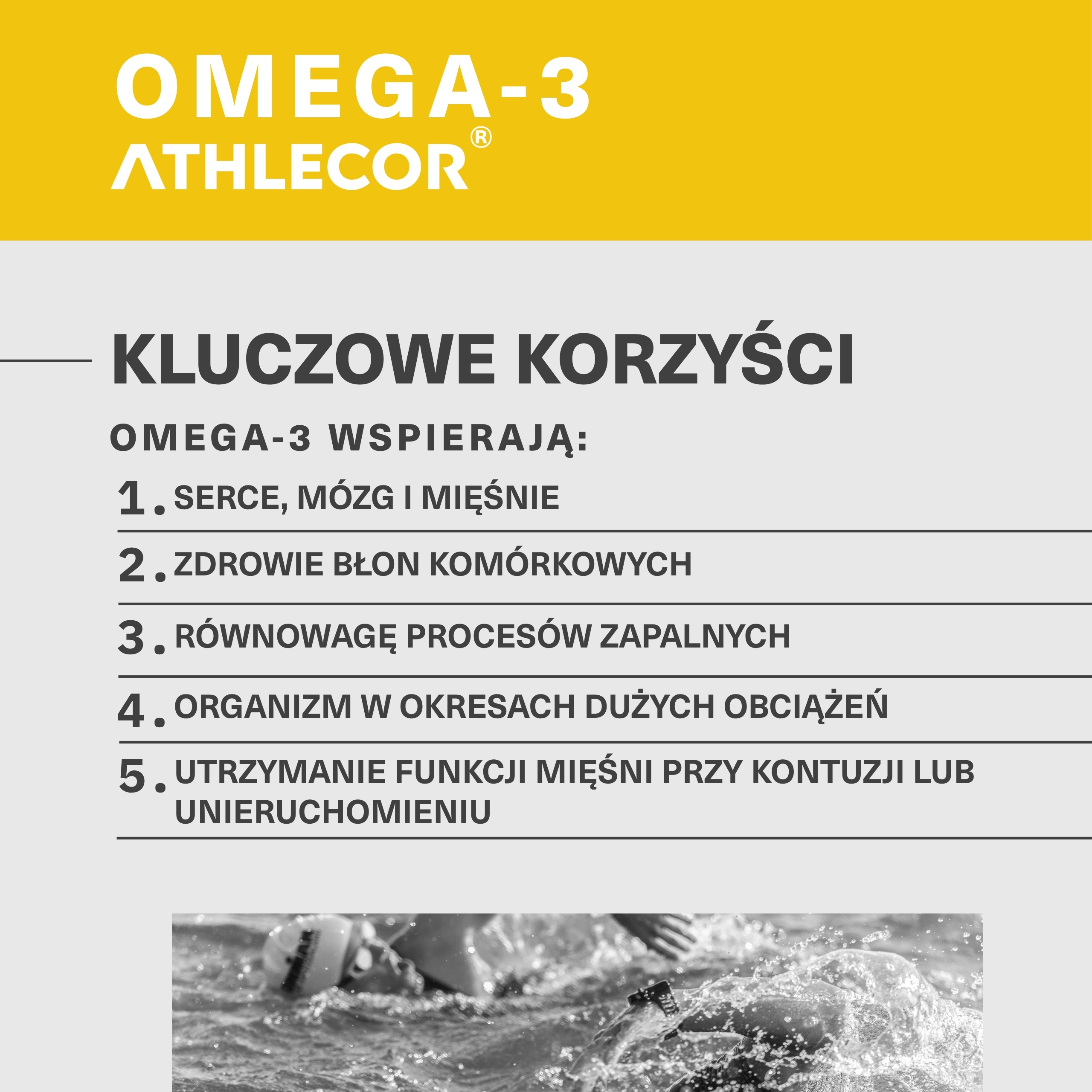
Key benefits

  • Szybsza regeneracja po treningu
    To najlepiej udokumentowane działanie omega-3 w sporcie. EPA i DHA wpływają na markery uszkodzenia mięśni i bolesność powysiłkową, czyli pomagają wrócić do pełni sił po ciężkich sesjach, interwałach i treningu ekscentrycznym.
  • Realna dawka: 1000 mg EPA + 500 mg DHA
    Dwie kapsułki pokrywają zakres rekomendowany dla osób aktywnych (ISSN 2025: 1–2 g EPA + DHA dziennie). Bez kombinowania i łykania garści tabletek, pełna dawka pracująca w dwóch kapsułkach.
  • Świeżość potwierdzona w gotowym produkcie (TOTOX 10,5)
    Wskaźnik utlenienia zmierzony nie w surowcu, ale w gotowych kapsułkach, wynik 10,5 to mniej niż połowa limitu standardu GOED (26). Świeży olej działa lepiej i nie odbija się rybą. Wyniki badań każdej partii są na stronie.
  • Lepsze wchłanianie (forma triglicerydowa)
    EPA i DHA w formie TG wchłaniają się o około 50% lepiej niż tańsze estry etylowe (badanie Dyerberga 2010). Więcej z każdej kapsułki trafia tam, gdzie ma działać.
  • Wsparcie masy mięśniowej przy kontuzji i przerwie
    Gdy z powodu urazu musisz odpuścić trening, omega-3 mogą pomóc ograniczyć utratę mięśni (przegląd McGlory 2019). To obszar, w którym suplementacja ma realne uzasadnienie właśnie w okresach unieruchomienia.
  • Serce i głowa pod obciążeniem
    Z wiekiem i przy dużych obciążeniach treningowych stabilna podaż EPA i DHA nabiera znaczenia dla serca i układu nerwowego. Omega-3 to jeden z najlepiej przebadanych suplementów w tym kontekście, szczególnie dla zawodników 40+.
  • Opakowanie na 50 dni
    100 kapsułek softgel. Przy porcji 2 kapsułek dziennie starcza na blisko 2 miesiące, a przy dawce podtrzymującej (1 kapsułka) na ponad 3 miesiące.

Omega-3 Index: a metric worth knowing

The Omega-3 Index is the percentage share of EPA and DHA in the membranes of red blood cells. Put simply: it is the metric that shows the body's long-term saturation with omega-3 fatty acids. Unlike a standard omega-3 measurement in blood, the Omega-3 Index does not depend on what you ate the day before, because cell membranes reflect status from the past several weeks.

Reference ranges

  • Below 5%:low. Typical result for people who do not eat fish or eat it very rarely.
  • 5-8%: intermediate. Typical for people who eat fish irregularly or include small amounts of seafood in their diet.
  • Above 8%:target. The value worth aiming for if you want to look after long-term omega-3 status.

How it is tested

Most often from a drop of blood (dried blood spot test) or from a venous sample in a laboratory. The result comes back within a few days. After changing the supplement dose, it is worth repeating the test after 8 to 12 weeks.

Dosage

Dose selection based on omega-3 status

  • No fish in the diet or Omega-3 Index below 5%::
    2 kapsułki dziennie przez 4-6 tygodni (dawka wysycająca), następnie 1 kapsułka dziennie jako dawka podtrzymująca.
  • Occasional fish consumption or Omega-3 Index 5 to 8%::
    1 capsule per day.
  • Regular fish consumption or Omega-3 Index above 8%::
    1 kapsułka co drugi dzień, lub 1 kapsułka dziennie w okresach mniejszego spożycia ryb (zima, wyjazdy).
  • Intensified exertion, post-injury period, heavy accumulated load::
    2-3 kapsułki dziennie przez krótki okres, potem powrót do dawki podstawowej.

When and how to take

You can freely choose the time of day, but it is best to take Omega-3 with a meal containing fat. This significantly improves the absorption of EPA and DHA. Consistency matters more than the specific time.

If "fishy" burps appear, it is worth taking the capsule in the middle of a meal (not at the start) or storing the pack in the refrigerator.

People taking anticoagulant medication or preparing for a planned procedure should consult supplementation with a doctor.

Who is it for?

  • Trenujesz regularnie i liczy się dla Ciebie regeneracja
    After heavy training sessions, intervals or eccentric sessions, omega-3 is the nutrient most frequently mentioned in studies in the context of post-exercise soreness and the inflammatory response to exertion.
  • Rzadko jesz tłuste ryby (łosoś, makrela, sardynki, śledź)
    The WHO recommendation is 2 servings of fatty fish per week. Realistically, in the Polish diet, oily fish is a rarity. If your fish intake is mainly frozen cod, surimi or breaded fillet once a month, EPA and DHA supplementation makes real sense.
  • Jesteś w okresie kontuzji lub ograniczonej aktywności
    Studies (including McGlory 2019) suggest that omega-3 can support the maintenance of muscle mass and function during periods of forced inactivity. This is an area where supplementation has potentially real justification.
  • Masters (40+) i osoby dbające o zdrowie sercowo-naczyniowe
    With age, the significance of stable EPA and DHA intake for the heart and nervous system increases. Omega-3 is one of the better-documented supplements for this age group.

How does Athlecor Omega-3 work?

Mechanism: EPA and DHA as cell membrane building blocks

EPA and DHA build into cell membranes practically throughout the body: the heart, brain, muscles, retina, immune cells. The more of them in the membrane, the more differently that membrane functions: elasticity, signal conduction and enzyme activity all change. This mechanism produces the effects of omega-3 in many different tissues, from the cardiovascular system through the nervous system to muscle recovery.

What EFSA confirms

Health claims approved by EFSA (reg. 432/2012):

  • EPA and DHA contribute to normal heart function (at a daily intake of at least 250 mg EPA + DHA).
  • DHA contributes to the maintenance of normal brain function (at least 250 mg DHA per day).
  • DHA contributes to the maintenance of normal vision (at least 250 mg DHA per day).

What research shows in the context of sport

The 2025 ISSN position statement and reviews from recent years describe three areas where omega-3 may have significance for active people.

Regeneracja po wysiłku
This is the most consistent area. Several reviews (Fernández-Lázaro 2024, Thielecke 2020, Lewis 2020) indicate that EPA and DHA can affect markers of inflammatory response and muscle damage after exertion (CK, LDH, muscle soreness).

Utrzymanie masy i funkcji mięśni
The McGlory 2019 review describes studies in which omega-3 enhanced the muscle protein synthesis response to amino acid intake, and in a 2-week leg immobilization model, weakened muscle mass loss. This area is particularly interesting in the context of injury or periods of limited activity.

Wydolność i układ sercowo-naczyniowy pod wysiłkiem
The data here is mixed. The ISSN position statement suggests a possible influence on the cardiovascular response during aerobic exertion, but the direct impact on performance (times, aerobic ceiling) is not unambiguous.

Time to take effect: omega-3 is a long-game play

The effects of omega-3 are not a matter of days, but weeks. Building EPA and DHA into cell membranes takes time. Clear changes in the Omega-3 Index are typically visible after 8 to 12 weeks of regular supplementation. On the other hand, after stopping use, the effects do not disappear immediately: the fatty acids are gradually washed out of the membranes, not from one day to the next.

Additional benefits

  • Certified raw material (Friends of the Sea)
    The fish oil used in Athlecor Omega-3 carries the Friends of the Sea certification, one of the main organizations certifying global fisheries. The certification covers control of fishing grounds, harvesting methods and fish origin. The raw material is Peruvian anchovy oil (Engraulis ringens), sourced from Pacific fisheries.
  • Triglyceride form (TG)
    EPA and DHA are present in the product as triglycerides. In digestion, pancreatic lipase hydrolyzes the triglycerides in the small intestine, releasing fatty acids ready for absorption. Ethyl esters (EE) require earlier separation of the ethanol particle, which extends and complicates the digestive process. A detailed comparison of the bioavailability of both forms (including data from the Dyerberg 2010 study) can be found in the "Scientific research" section.
  • Safe long-term
    EPA and DHA supplementation at recommended doses is one of the better-researched interventions in terms of safety. The product is suitable for daily, long-term use in healthy, physically active people. The most common minor issues (fishy burps, mild stomach discomfort) can be reduced by taking the capsule in the middle of a meal or storing the pack in the refrigerator.
  • Practical form
    Soft softgel capsules are convenient for daily use. They have no pronounced taste, are easy to swallow and do not require measuring out spoons of oil. The dose is easy to scale: 1, 2 or 3 capsules per day depending on need.

Ingredients

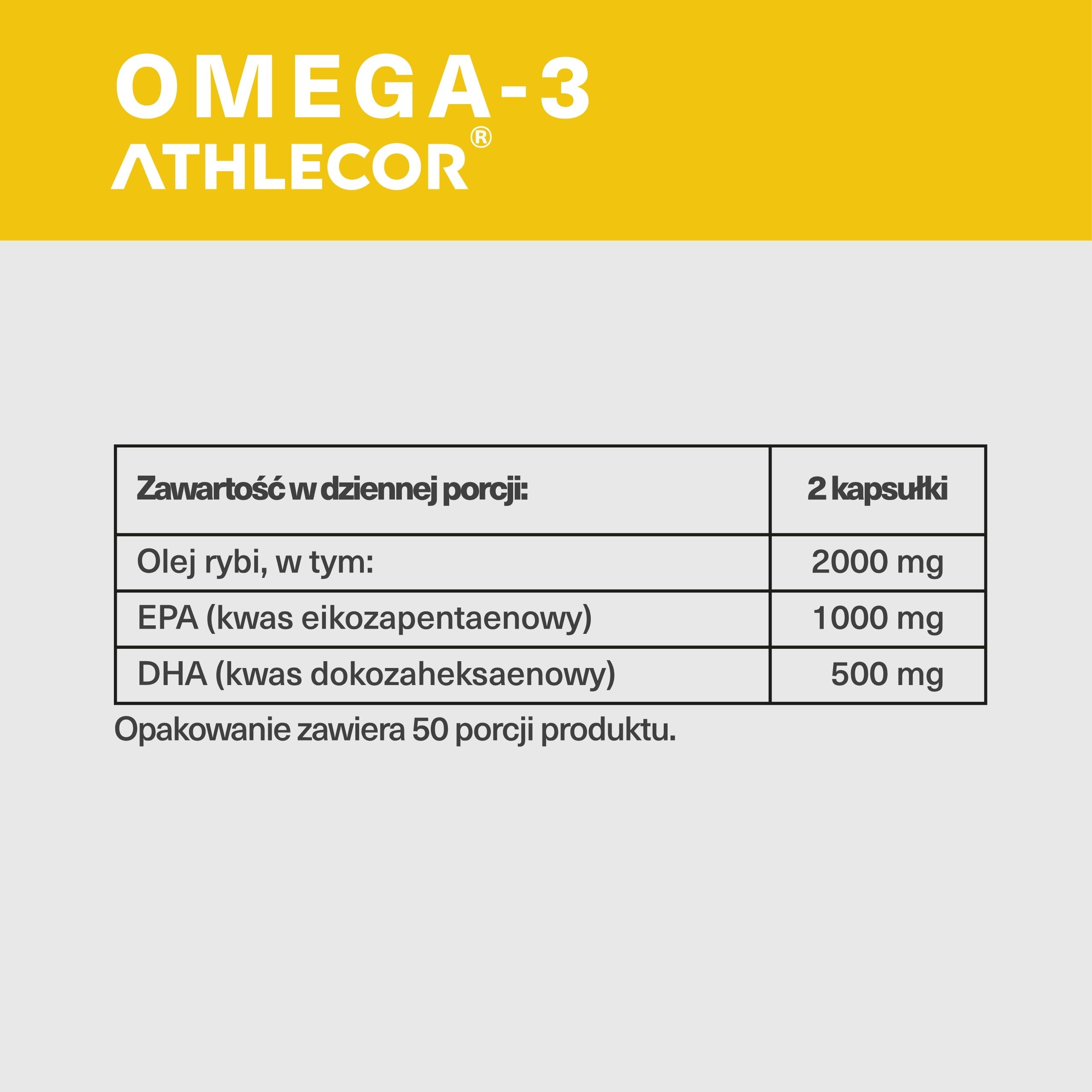
Content per daily serving (2 capsules)

Ingredient Amount
Fish oil 2000 mg
including EPA (eicosapentaenoic acid) 1000 mg
including DHA (docosahexaenoic acid) 500 mg

Package contains 50 servings of the product.

SCIENTIFIC RESEARCH

Omega-3 to jedna z najlepiej przebadanych grup suplementów, a EPA i DHA mają zatwierdzone oświadczenia EFSA dla serca, mózgu i wzroku. W kontekście sportu najmocniejsze dane dotyczą regeneracji, dlatego nie obiecujemy poprawy wyników, tylko pokazujemy, gdzie omega-3 faktycznie pracują, w jakiej dawce i jak długo trzeba je stosować. Poniżej sześć kluczowych publikacji: stanowisko eksperckie ISSN z 2025 roku, trzy przeglądy o regeneracji i wydolności, przegląd o ochronie mięśni w okresach bezczynności oraz badanie porównujące biodostępność różnych form omega-3. Przy każdej pozycji znajdziesz najpierw to, co wynika z niej dla osoby aktywnej, a pod rozwinięciem pełną wersję naukową ze wszystkimi liczbami.

1Aktualne stanowisko ISSN: omega-3 wspierają regenerację i mogą pomagać w rozwoju siły przy treningu oporowym.

Jäger 2025, Journal of the International Society of Sports Nutrition. International Society of Sports Nutrition Position Stand: Long-Chain Omega-3 Polyunsaturated Fatty Acids.

Stanowisko ISSN z 2025 roku wskazuje, że sportowcy częściej mają niewystarczający status omega-3, a suplementacja skutecznie go podnosi. Omega-3 w połączeniu z treningiem oporowym mogą wspierać rozwój siły, zależnie od dawki i czasu, oraz zmniejszać subiektywnie odczuwaną bolesność mięśni po wysiłku. Autorzy uczciwie zaznaczają, że bardziej obiektywne wskaźniki regeneracji i hipertrofia u młodych dorosłych nie reagują równie spójnie.

Source: Jäger, Ralf et al. “International Society of Sports Nutrition Position Stand: Long-Chain Omega-3 Polyunsaturated Fatty Acids.” Journal of the International Society of Sports Nutrition vol. 22,1 (2025): 2441775. doi:10.1080/15502783.2024.2441775
2Suplementacja obniżała część markerów uszkodzenia mięśni po wysiłku, głównie z EPA i DHA.

Fernández-Lázaro 2024, Nutrients. Omega-3 Fatty Acid Supplementation on Post-Exercise Inflammation, Muscle Damage, Oxidative Response, and Sports Performance in Physically Healthy Adults: A Systematic Review of Randomized Controlled Trials.

Przegląd 13 badań z grupą kontrolną pokazał, że w 3 z 4 prac oceniających kinazę kreatynową i dehydrogenazę mleczanową markery te były niższe w grupach z omega-3 niż w kontrolnych. Wpływ na opóźnioną bolesność mięśniową był mieszany. Korzyści dotyczyły przede wszystkim EPA i DHA, a jedyne badanie z roślinnym ALA nie wykazało efektu u osób aktywnych. To jeden z powodów, dla których stawiamy na EPA i DHA z oleju rybiego.

Source: Fernández-Lázaro, Diego et al. “Omega-3 Fatty Acid Supplementation on Post-Exercise Inflammation, Muscle Damage, Oxidative Response, and Sports Performance in Physically Healthy Adults-A Systematic Review of Randomized Controlled Trials.” Nutrients vol. 16,13 2044. 27 Jun. 2024, doi:10.3390/nu16132044

3Efekt rośnie z czasem i dawką: korzyści częściej po 6-8 tygodniach i przy ponad 1,5-2 g dziennie.

Thielecke i Blannin 2020, Nutrients. Omega-3 Fatty Acids for Sport Performance: Are They Equally Beneficial for Athletes and Amateurs? A Narrative Review.

Przegląd 53 badań rozdzielił sportowców i amatorów. W regeneracji dane były spójniejsze niż w wydolności, zwłaszcza dla bolesności mięśniowej, podczas gdy bezpośredni wpływ na wynik sportowy nie był jednoznaczny. Korzystne efekty częściej pojawiały się w dłuższych protokołach, ponad 6-8 tygodni, i przy dawkach powyżej około 1,5-2 g dziennie. Większe korzyści częściej notowano u amatorów niż u zawodników wyczynowych.

Source: Thielecke, Frank, and Andrew Blannin. “Omega-3 Fatty Acids for Sport Performance-Are They Equally Beneficial for Athletes and Amateurs? A Narrative Review.” Nutrients vol. 12,12 3712. 30 Nov. 2020, doi:10.3390/nu12123712

4Najbardziej obiecujące dane dotyczą regeneracji mięśni, nie bezpośredniego wyniku sportowego.

Lewis 2020, Advances in Nutrition. Are There Benefits from the Use of Fish Oil Supplements in Athletes? A Systematic Review.

Przegląd 32 badań z grupą kontrolną u sportowców od rekreacyjnych po elitarnych wskazał, że najbardziej spójne efekty dotyczyły układu nerwowego, sercowo-naczyniowego, cytokin zapalnych i mięśni szkieletowych. W regeneracji 4 z 7 badań pokazało korzystny wpływ na bolesność, kinazę kreatynową i wybrane parametry skoku. Jednocześnie autorzy nie wykazali jednoznacznych korzyści dla wydolności tlenowej, siły ani adaptacji treningowej. Uczciwie: to suplement bardziej pod regenerację i zdrowie niż pod sam wynik.

Source: Lewis, Nathan A et al. “Are There Benefits from the Use of Fish Oil Supplements in Athletes? A Systematic Review.” Advances in nutrition (Bethesda, Md.) vol. 11,5 (2020): 1300-1314. doi:10.1093/advances/nmaa050

5Najciekawszy scenariusz: ochrona masy mięśniowej w okresie unieruchomienia i kontuzji.

McGlory 2019, Frontiers in Nutrition. The Influence of Omega-3 Fatty Acids on Skeletal Muscle Protein Turnover in Health, Disuse, and Disease.

Przegląd o obrocie białek mięśniowych opisuje badanie, w którym 6 tygodni suplementacji około 3 g EPA i 2 g DHA dziennie osłabiało spadek masy i objętości mięśni podczas 2-tygodniowego unieruchomienia nogi u młodych kobiet, a po powrocie do aktywności grupa omega-3 odzyskała utraconą objętość. U starszych osób 6 miesięcy suplementacji wiązało się ze wzrostem beztłuszczowej masy i siły. Autorzy zaznaczają jednak, że nie wszystkie badania potwierdzają działanie anaboliczne.

Source: McGlory, Chris et al. “The Influence of Omega-3 Fatty Acids on Skeletal Muscle Protein Turnover in Health, Disuse, and Disease.” Frontiers in nutrition vol. 6 144. 6 Sep. 2019, doi:10.3389/fnut.2019.00144

6Forma ma znaczenie: triglicerydy wchłaniają się najlepiej, estry etylowe najsłabiej.

Dyerberg 2010, Prostaglandins, Leukotrienes, and Essential Fatty Acids. Bioavailability of marine n-3 fatty acid formulations.

W badaniu na 72 osobach porównano biodostępność EPA i DHA z kilku form oleju rybiego po 2 tygodniach podaży około 3,3 g dziennie. Najwyższą biodostępność miały triglicerydy re-esterowane, a najniższą estry etylowe, popularny i tańszy surowiec rynkowy. Athlecor Omega-3 dostarcza EPA i DHA w formie triglicerydowej, tej samej, w jakiej występują w mięsie ryb.

Source: Dyerberg, J et al. “Bioavailability of marine n-3 fatty acid formulations.” Prostaglandins, leukotrienes, and essential fatty acids vol. 83,3 (2010): 137-41. doi:10.1016/j.plefa.2010.06.007

WHAT TO KNOW ABOUT OMEGA-3. FATTY ACIDS

Find answers to key questions about this product.


What is the daily omega-3 dose for everyday use?

For a healthy adult, EFSA indicates 250 mg of EPA + DHA daily as a basic preventive dose for maintaining proper heart function. This is the absolute minimum. The WHO and most cardiology societies recommend 500 to 600 mg of EPA + DHA daily, which corresponds to 1 capsule of Athlecor Omega-3. For physically active individuals, in the context of recovery, higher targets are more frequently cited: 1000 to 2000 mg of EPA + DHA daily (International Society of Sports Nutrition 2025 position), which corresponds to 2 capsules of Athlecor Omega-3. In practice: if you regularly eat fatty fish (2 portions per week), 1 capsule daily is a good choice. If you eat little fish or train intensively, 2 capsules daily.

How long before you see the effects of omega-3 supplementation?

Omega-3 is long-term supplementation. EPA and DHA incorporate into cell membranes gradually, and this process takes weeks, not days. Changes in the Omega-3 Index (the percentage of EPA and DHA in red blood cell membranes) are usually visible after 8 to 12 weeks of regular supplementation. This means two things. First: there's no point expecting effects after a week. Second: after stopping supplementation, the effect doesn't disappear overnight, because these acids are gradually washed out of the membranes over the following weeks. The exception is acute effects described in some studies (including cardiovascular markers), but in the context of post-exercise recovery and long-term body saturation with omega-3, we're talking about weeks.

When should I take the capsules, morning, evening, before or after training?

You can choose any time of day. With omega-3, consistency matters much more than the specific time. One thing, however, does affect absorption: omega-3 is best taken with a meal containing fat. Fat in the meal stimulates the secretion of bile and pancreatic lipase, which are essential for digesting and absorbing fatty acids. Supplementation on an empty stomach or with a low-fat meal significantly reduces the bioavailability of EPA and DHA. In the context of training, there are no studies indicating that the timing (before/after training) changes the effects of omega-3. Choose the time that fits most easily into your day, as long as it's with a meal containing fat.

What is the Omega-3 Index and should I test it?

The Omega-3 Index is the percentage of EPA and DHA in red blood cell membranes. It shows long-term body saturation with omega-3 fatty acids, regardless of what you ate the previous day. Reference ranges: Below 5%: low (typical for people who rarely eat fish). 5 to 8%: intermediate (in people eating fish irregularly). Above 8%: target (the value worth aiming for). The test is performed from a drop of blood (dried blood spot test, can be done at home) or from a venous sample in a laboratory. Results come back within a few days. Is it worth testing? Yes, if you want to consciously choose your dose rather than guess. Most people don't know they have a low Omega-3 Index. Even people who eat fish once a week often land in the 4 to 5% range. After changing your supplement dose, it's worth repeating the measurement after 8 to 12 weeks.

Do I need to eat fish if I'm taking omega-3 capsules?

You don't need to, but it's worth eating fish for reasons beyond just EPA and DHA. Fatty sea fish (salmon, mackerel, sardines, herring) deliver, in addition to omega-3, high-quality protein, vitamin D, iodine, selenium, and bioactive peptides that an omega-3 supplement cannot replace. EPA and DHA supplementation from capsules effectively covers the requirement for these two specific fatty acids. That is its role. No supplement replaces the rest of the nutritional value of fish. In practice: if you eat fatty fish twice a week, supplementation is optional. If you eat them less often, supplementation becomes a sensible addition.

Is it worth increasing the dose during heavy training loads or after injury?

Yes, in both situations the justification is real, though for different reasons. Heavy training load: the ISSN 2025 position and reviews by Fernández-Lázaro 2024 and Thielecke 2020 indicate that during intensive training, higher omega-3 doses (1500 to 2000 mg of EPA + DHA daily) may support inflammatory response markers and muscle soreness. During heavy training blocks, it's worth considering moving from 1 to 2 capsules daily. After injury or during reduced activity: the McGlory 2019 review describes studies in which omega-3 (around 3 to 4 g of EPA + DHA daily for 2 to 4 weeks) supported the maintenance of muscle mass during immobilization periods and enhanced the muscle protein synthesis response to amino acid intake. During such a period, 2 to 3 capsules daily for several weeks has potentially real justification. Once you return to training, go back to the baseline dose.

Do omega-3 "thin the blood" and increase bleeding risk?

High doses of omega-3 (above 3 to 4 g of EPA + DHA daily) may affect blood platelet aggregation and prolong bleeding time. In clinical practice, this means: With standard supplementation doses (1 to 2 capsules daily, 1000 to 2000 mg of EPA + DHA), the risk of clinically significant clotting disorders is minimal. People taking anticoagulants (warfarin, acenocoumarol, new oral anticoagulants) or antiplatelet drugs (acetylsalicylic acid, clopidogrel) should consult their doctor about supplementation. Before planned surgery, traditional recommendations advise stopping omega-3 for 7 to 14 days, although newer meta-analyses do not confirm that supplementation actually increases the risk of perioperative bleeding. The decision should belong to the operating surgeon. In most everyday situations, a healthy adult can safely use omega-3 according to the recommended dose.

Can omega-3 cause side effects?

At recommended doses, omega-3 is one of the better-tolerated supplement groups. The most common minor complaints are: Fishy burping: usually stops when you take the capsule in the middle of a meal (not at the start) or when you store the packaging in the fridge. Mild stomach discomfort: may occur in the first days of supplementation, usually resolves on its own. Splitting the dose into two servings (morning and evening instead of one) helps. Looser stools at very high doses (above 3 g of EPA + DHA in a single dose): rare, more often seen in research protocols than in typical supplementation. High doses of omega-3 may also affect blood clotting (see question above).

How should omega-3 capsules be stored properly?

Three things matter most: cool, dark, dry conditions. Temperature: the manufacturer recommends 5 to 25°C. In practice: a kitchen cabinet away from the stove is the absolute minimum, the fridge is optimal (especially after opening the packaging). Light: the packaging protects capsules from light. Don't transfer them to other containers, especially transparent ones. Moisture: avoid storing in the bathroom. Once opened, use the capsules within 6 months for best quality, even though the expiration date is longer. Fish oil oxidizes over time, especially with exposure to air and heat. Oxidized oil loses efficacy and may have an unpleasant taste.

Will omega-3 help with joints?

Omega-3 is not a medication for joint disease, but due to its influence on inflammatory mediators, it may support symptom control in some people. In the case of chronic joint pain or suspected disease, a medical consultation is always the foundation; the supplement plays a supplementary role.

Can omega-3 be taken year-round, without breaks?

Yes. Unlike some supplements (e.g., polyphenols in high doses, where breaks during base-building periods are advisable), omega-3 is a supplement that works well in continuous, long-term supplementation. EPA and DHA incorporate into cell membranes, and their presence is physiologically important throughout the year, not only during specific training windows. Maintaining a high Omega-3 Index (above 8%) is a long-term goal, and achieving and maintaining this value requires regular, daily supplementation. In practice: 1 capsule daily year-round is a good baseline strategy. During periods of intense training or after injury, you can increase to 2 to 3 capsules daily.

ADD YOUR PRODUCT REVIEW

Dbamy o wiarygodność opinii, dlatego może je dodać wyłącznie osoba, która dokonała zakupu.
Każda opinia jest weryfikowana pod kątem potwierdzenia transakcji.

ADD REVIEW

FREQUENTLY BOUGHT TOGETHER

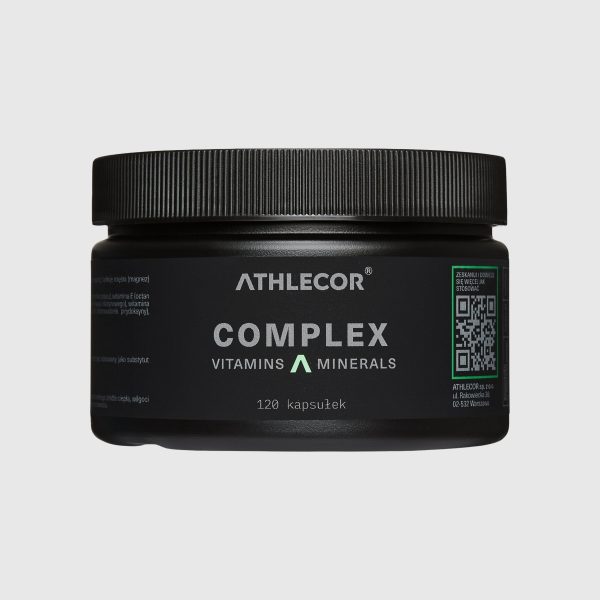
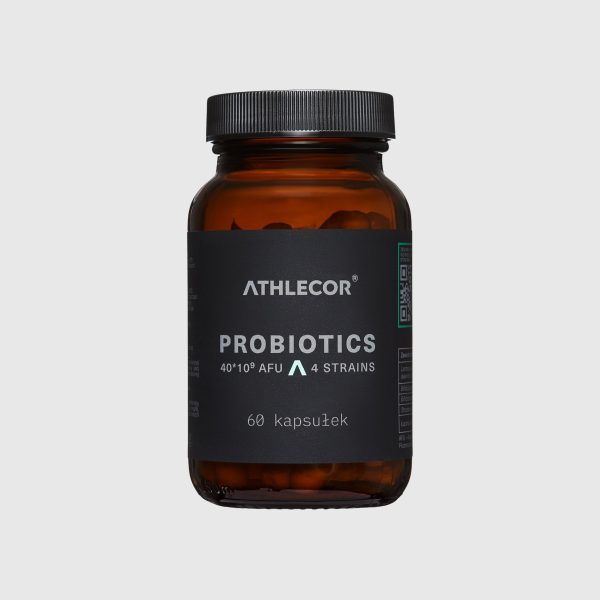
The foundation layer of the system. Daily ingredients essential for maintaining optimal health, immunity and metabolism.

COMPLEX. KOMPLEKS WITAMIN Z MAGNEZEM I CYNKIEM

COMPLEX. VITAMIN COMPLEX WITH MAGNESIUM AND ZINC

  • A vitamin and mineral complex designed for an intense lifestyle, training, and higher demands on the body.
  • B vitamins, magnesium, and zinc, ingredients essential for energy metabolism, muscle function, and immunity.
  • A convenient formula for regular supplementation during periods of intense training and a demanding lifestyle.
69,00 
PROBIOTICS. KOMPLEKS KULTUR BAKTERII PROBIOTYCZNYCH

PROBIOTICS. PROBIOTIC BACTERIAL CULTURE COMPLEX

  • Formula based on selected probiotic strains chosen on the basis of research involving active individuals.
  • A single capsule delivers up to 40 billion AFU of live bacterial cultures.
  • Microencapsulation technology and an enteric capsule support bacterial survival.
169,00 

PRZESUWAJ GRANICE
Z NAUKOWĄ PRECYZJĄ

Stworzyliśmy unikatowy algorytm, który pozwoli nam poznać Ciebie i Twoje sportowe oczekiwania. Przygotuj się na spersonalizowane rozwiązania, które zmienią sposób, w jaki myślisz o suplementacji.

ROZWIĄŻ TEST I DOKONAJ ZAKUPU