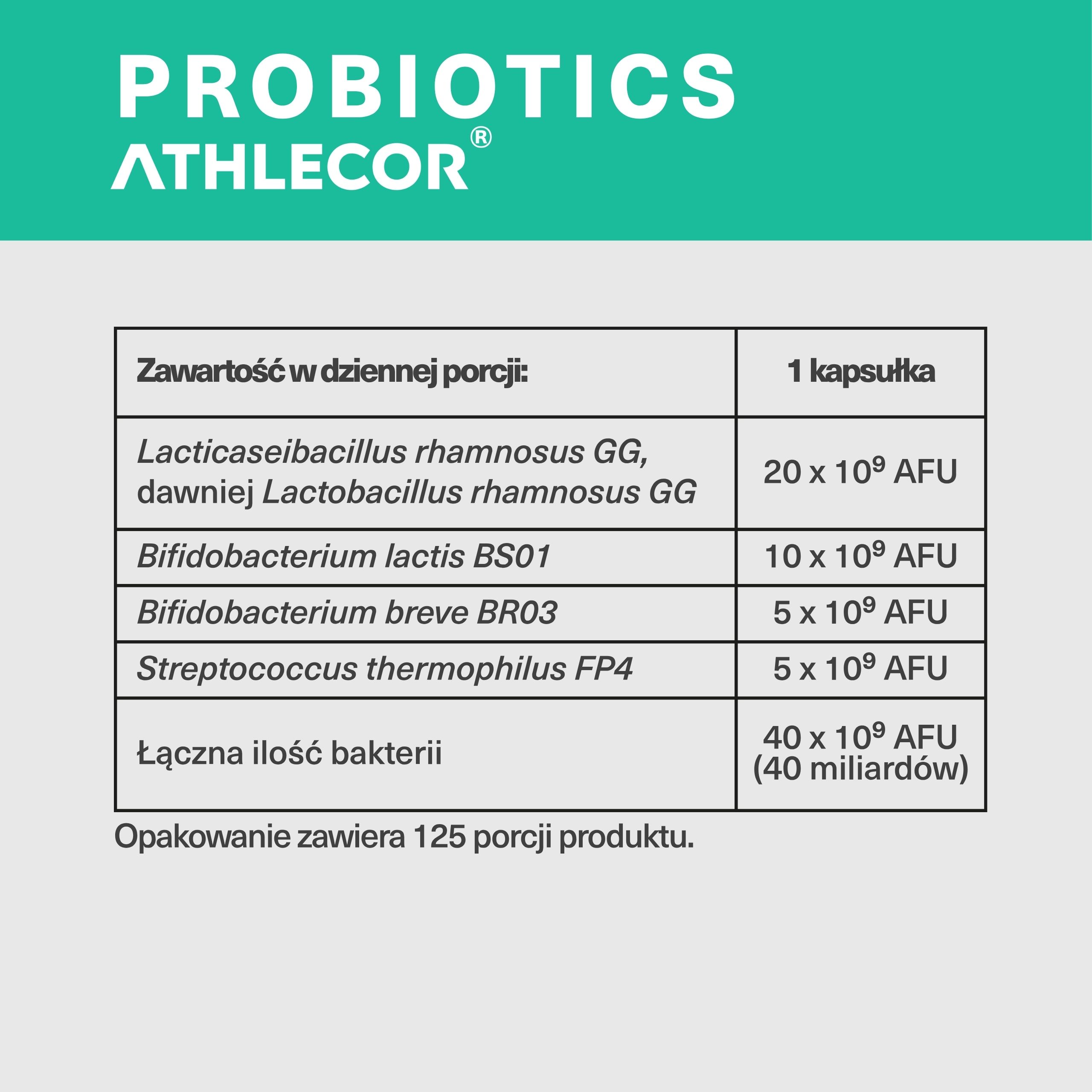

1Probiotyk działa szczepowo i dawkowo, więc liczy się nazwany szczep z konkretną dawką, nie ogólna kategoria.
Jäger 2019, Journal of the International Society of Sports Nutrition. International Society of Sports Nutrition Position Stand: Probiotics.
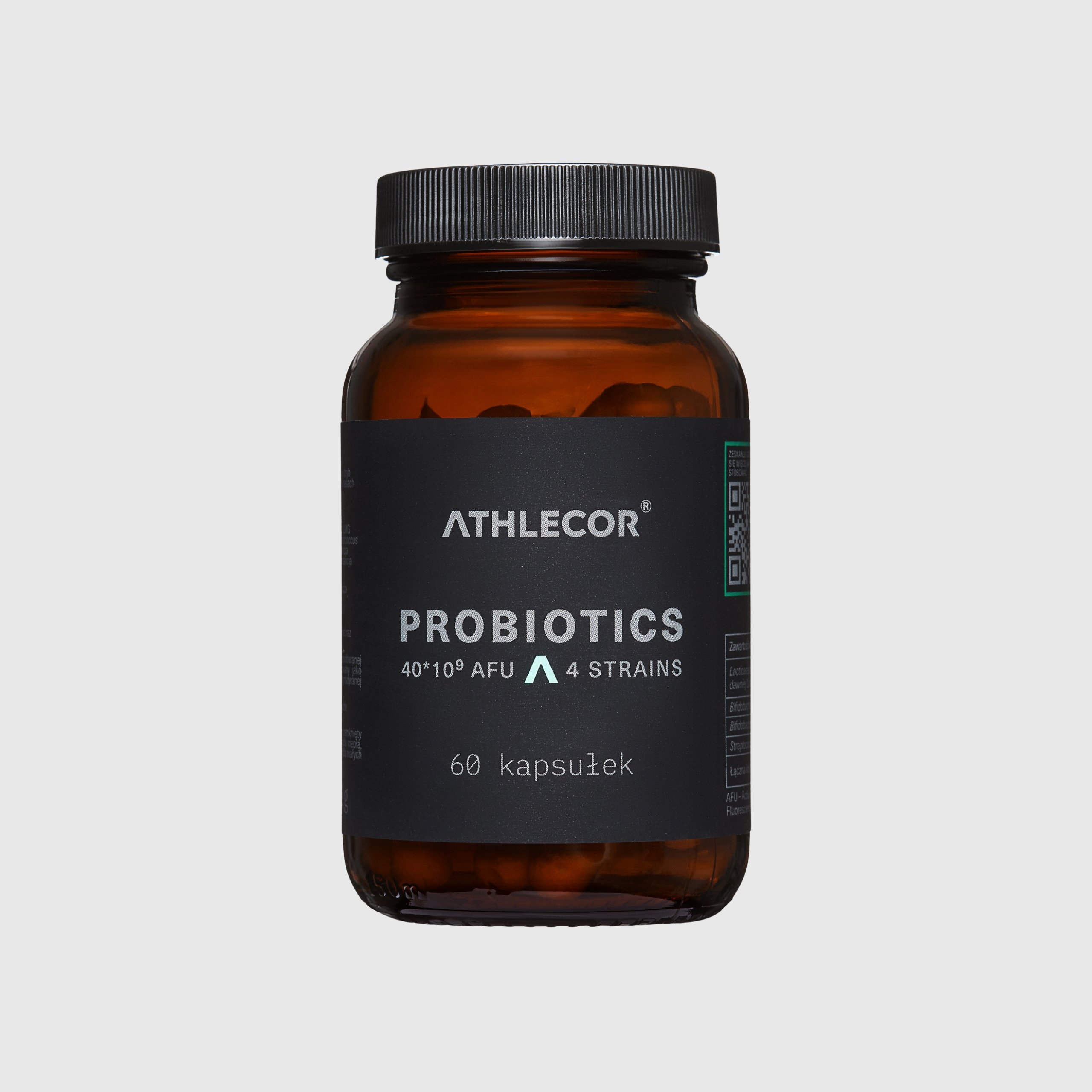
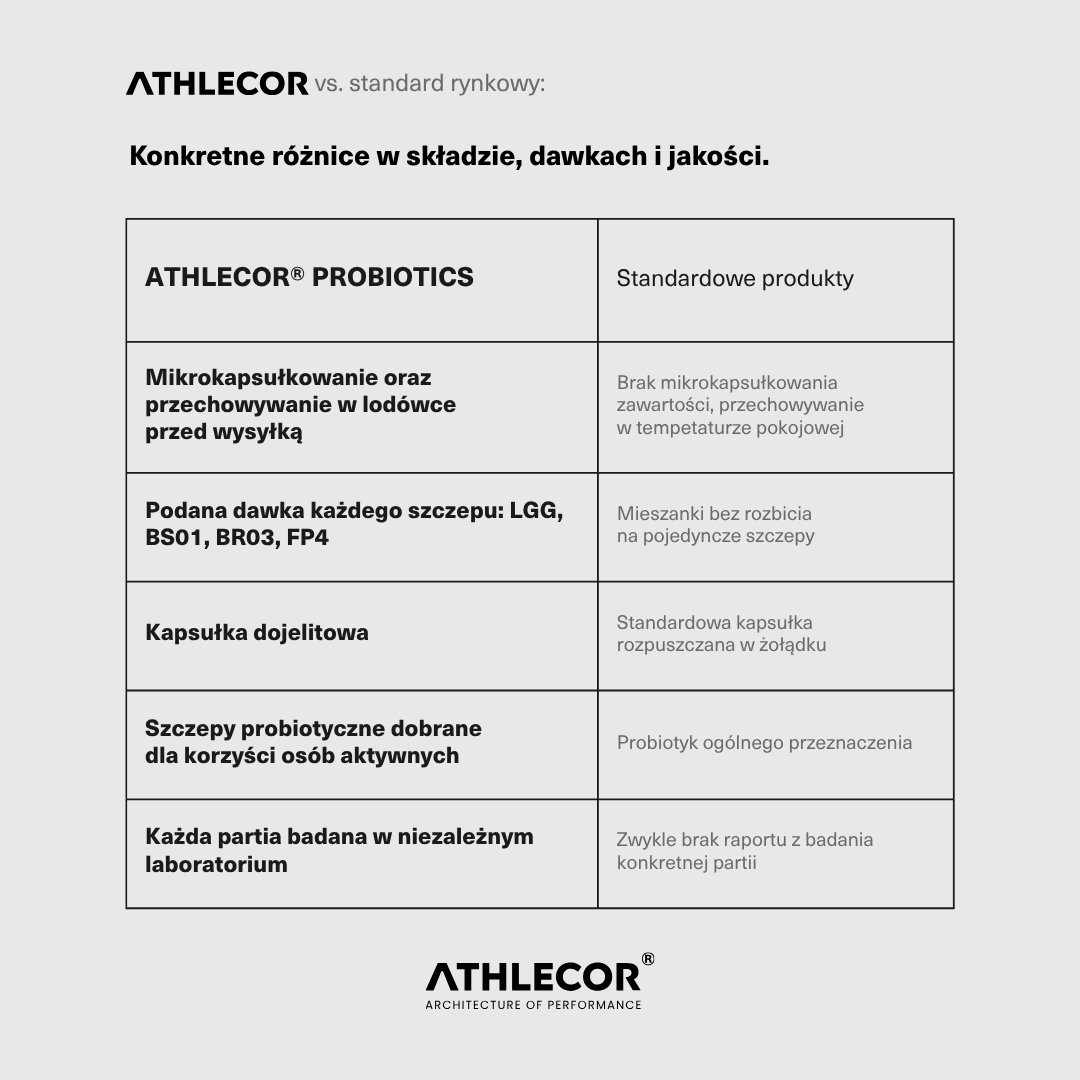
Stanowisko ISSN porządkuje, czego można oczekiwać po probiotykach w sporcie: najlepiej udokumentowane są rzadsze i krótsze infekcje górnych dróg oddechowych, wsparcie bariery jelitowej i regeneracja po wysiłku uszkadzającym mięśnie, a wpływ na bezpośredni wynik pozostaje niejednoznaczny. Autorzy wprost zalecają, żeby etykieta podawała rodzaj, gatunek i szczep każdego mikroorganizmu wraz z dawką. Dokładnie tak opisujemy formułę Probiotics.
Key conclusions
- The authors indicate that probiotics in sport are considered primarily in the context of supporting gut health and immune function, not as a classic supplement that directly improves performance.
- The document emphasises that probiotic effects are strain dependent and dose dependent. The authors also note that the product label should include the genus, species and strain of each microorganism, together with the quantity declared at the end of shelf life.
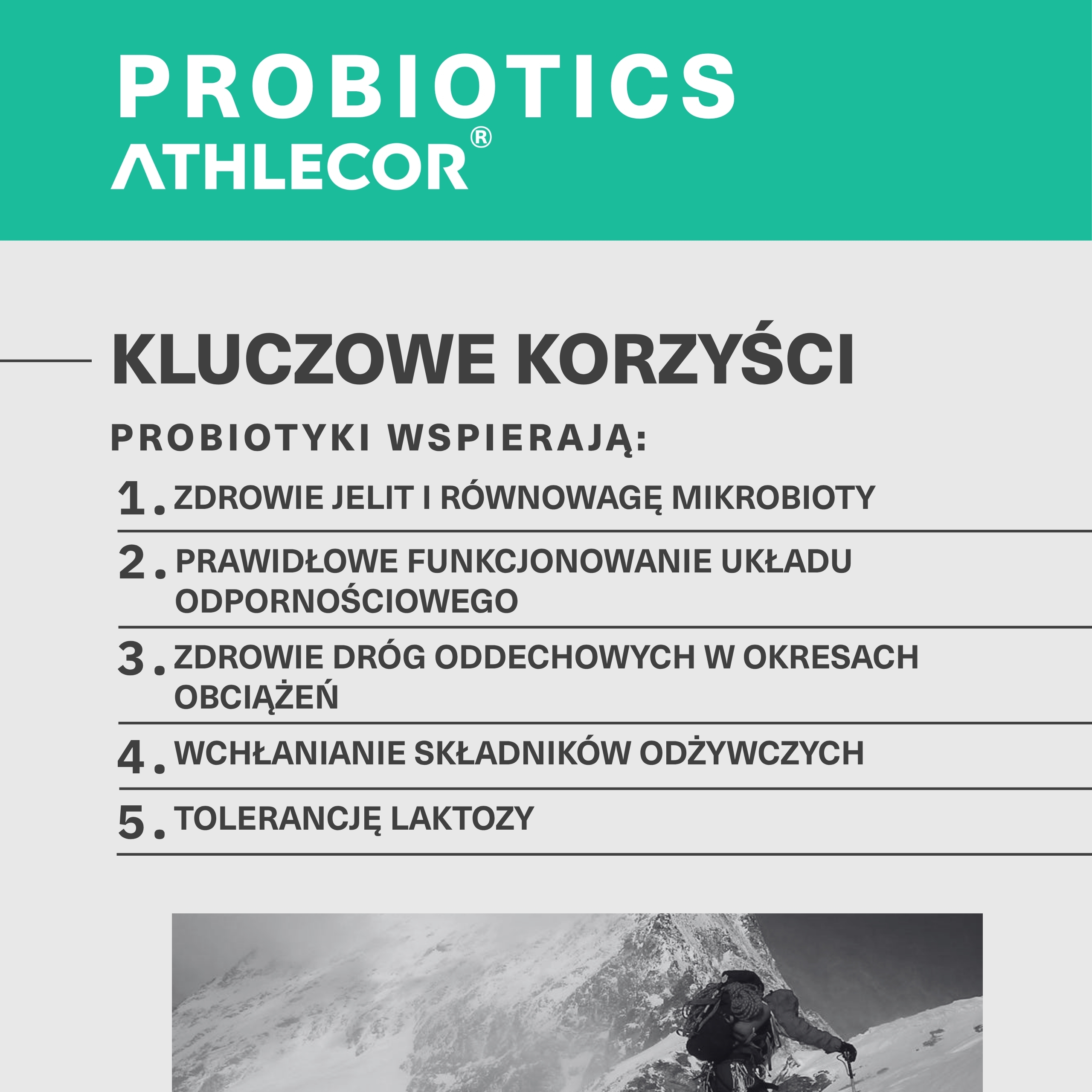
- In athletes exposed to heavy training load, selected probiotic strains may reduce the number of episodes, severity or duration of upper respiratory tract infections, especially during periods of heightened physical, mental or environmental stress.
- The position statement also notes that intense, prolonged exertion, particularly in high temperatures, can increase intestinal permeability. The authors emphasise that selected probiotic strains may support gut barrier integrity in athletes.
- Among studies on recovery after muscle-damaging exercise, the authors cite the combination of Bifidobacterium breve BR03 ratio, and Streptococcus thermophilus FP4.In a study involving trained men, supplementation with 5 × 10⁹ live cells of each strain daily for 3 weeks was linked to better maintenance of isometric peak torque and range of motion in the acute recovery phase, and to a reduction in interleukin 6 concentration.
- Regarding Lacticaseibacillus rhamnosus GG the position statement cites studies in which this strain was linked to improvements in selected aspects of gut health in athletes. In a study of marathon runners, no effect was observed on the frequency of respiratory tract infections or gastrointestinal episodes, but the duration of post-marathon gastrointestinal symptoms was reduced.
- At the same time, the document emphasises that the influence of probiotics on direct performance parameters and sports outcomes is less clear. The authors point out that results are mixed: of 24 studies assessing some performance parameter, 17 showed no effect and 7 recorded improvement.
- In their summary the authors judge that the available studies provide moderate evidence that probiotics may bring certain clinical benefits in athletes and very physically active people, but their use should be targeted and based on specific strains, not on the general assumption that every probiotic will work the same way.
Source: Jäger, Ralf et al. “International Society of Sports Nutrition Position Stand: Probiotics.” Journal of the International Society of Sports Nutrition vol. 16,1 62. 21 Dec. 2019, doi:10.1186/s12970-019-0329-0