
Wydajność

★★★★★
★★★★★
5.0 (5 opinii)

Opinie o produkcie (5.0)

kamil s
Opinia zweryfikowana

produkt idealnie się rozpuszcza i dobrze się po nim czuję, zdecydowanie polecam, szybka dostawa, dobrze zapakowane

Sebastian
Opinia zweryfikowana

Klasa sama w sobie. Jeżeli kreatyna to tylko z certyfikatem creapure !!

Kacpeer
Opinia zweryfikowana

ok

Teresa
Opinia zweryfikowana

Doceniam sygnowany certyfikacją surowiec - słyszałam że Creapure produkuje się w Niemczech; europejskie pochodzenie dla mnie zawsze na plus.

Janek D
Opinia zweryfikowana

Kupuję tylko Creapure

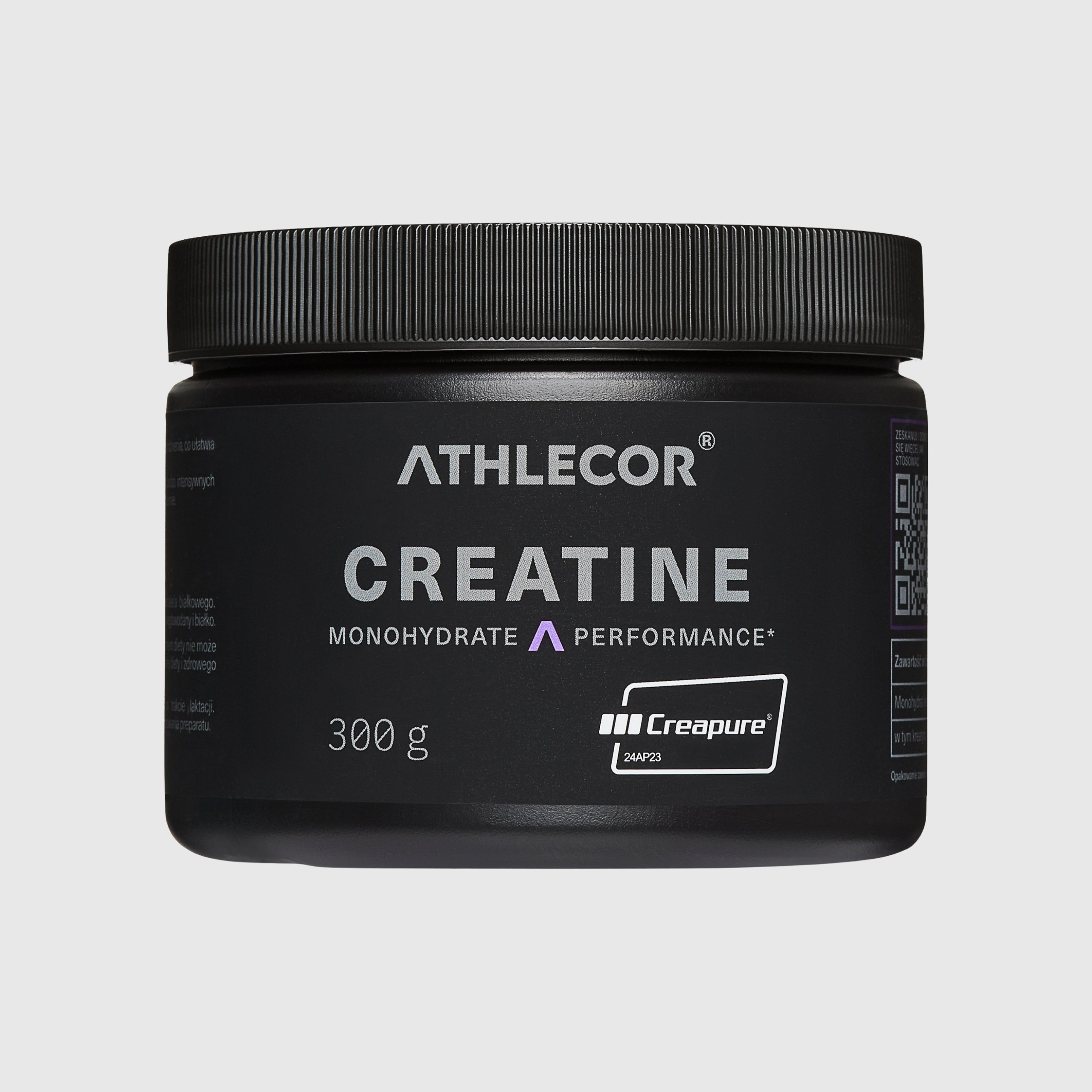
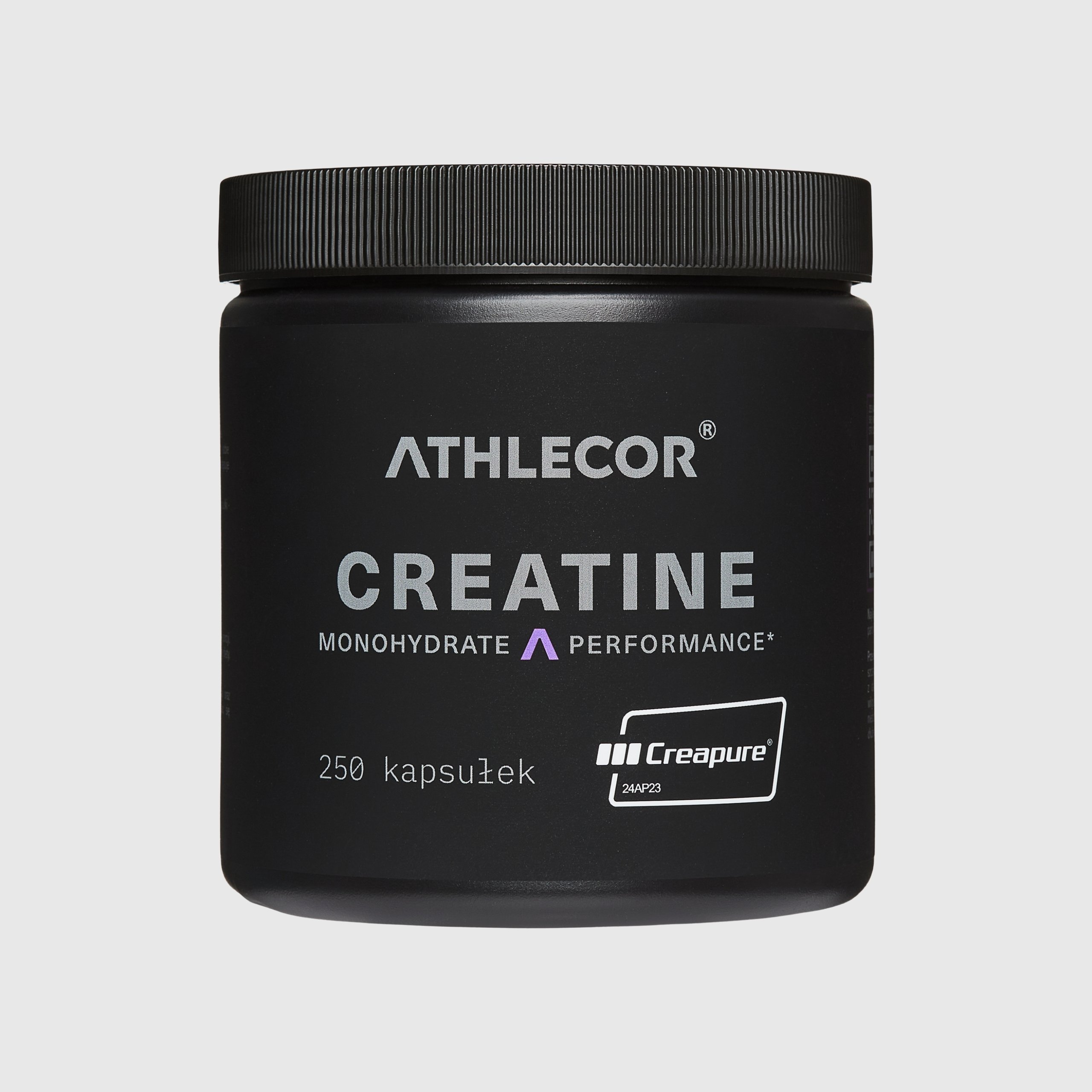
CREATINE CREAPURE®. POWDER/CAPSULES

300 G POWDER / 250 CAPSULES · CREAPURE® RAW MATERIAL · 2 FORMS TO CHOOSE FROM

Monohydrat kreatyny, najlepiej udokumentowany suplement ergogeniczny w sporcie, oparty na najwyższej jakości surowcu Creapure® dla tych, którzy nie idą na kompromis przy jego pochodzeniu.

Dlaczego ta kreatyna:

  • Siła, moc i beztłuszczowa masa: w połączeniu z systematycznym treningiem oporowym kreatyna zwiększa przyrosty siły i masy mięśniowej, to jej najlepiej udokumentowane działanie.
  • Maksymalne i powtarzane wysiłki: pojedyncze podejście, sprint, rzut, a także druga i trzecia akcja w rundzie, dzięki szybszej odbudowie fosfokreatyny.
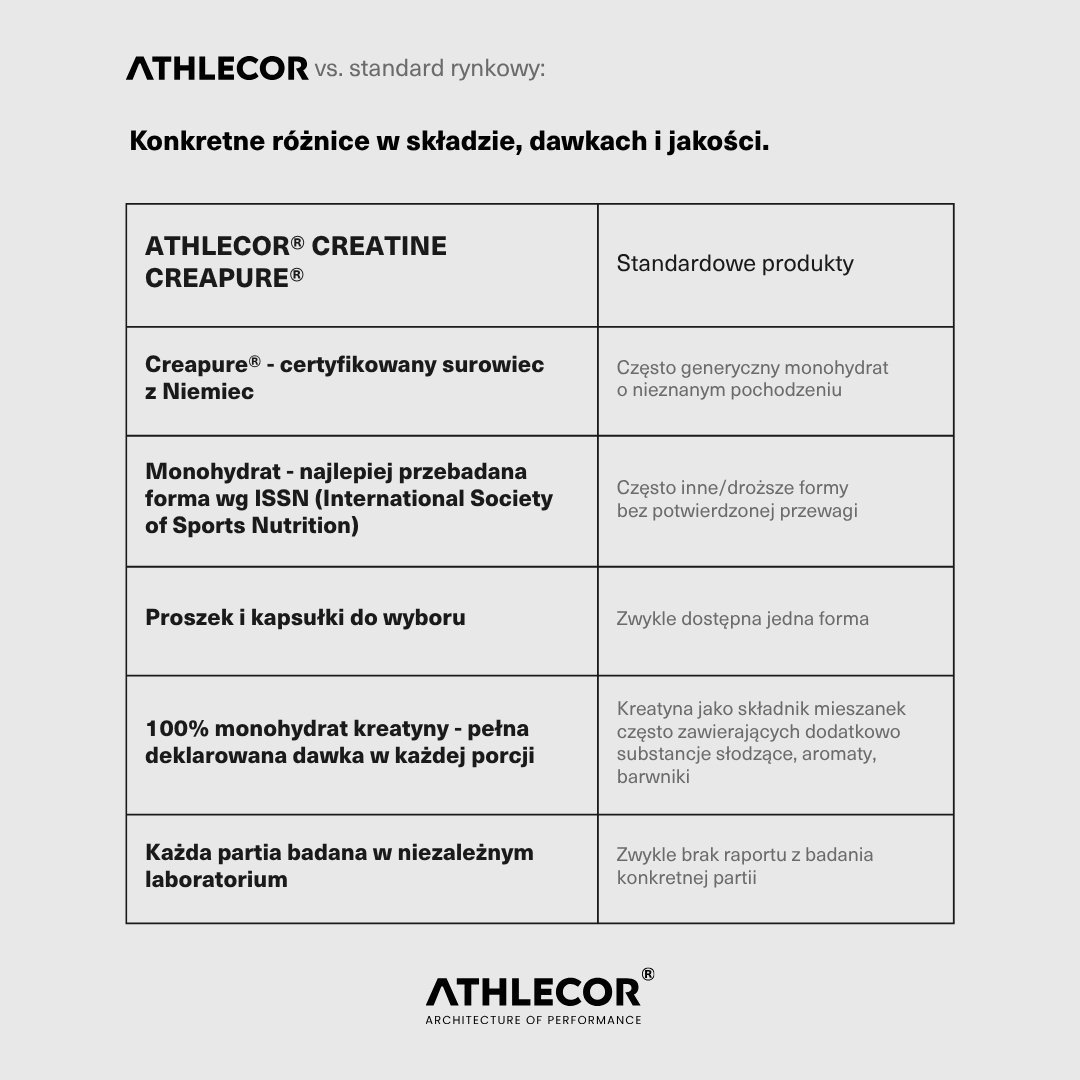
  • Surowiec Creapure® z Niemiec: niezależne audyty i powtarzalna czystość chemiczna, ta sama molekuła, która od dekad jest standardem w badaniach klinicznych.
  • Protokół na lata, nie na sezon: bezpieczna w długim stosowaniu (dane do 5 lat), bez cykli i przerw, bez utraty skuteczności.

Jedna porcja to 5 g monohydratu w proszku albo 4 kapsułki, dawka z zakresu 3-5 g rekomendowanego przez ISSN. Proszek i kapsułki działają identycznie, wybierasz pod swój tydzień. Opakowanie pokrywa 60 dni protokołu, a każda partia jest badana w niezależnym laboratorium.

Free delivery within POLAND from 290 zł

DELIVERY VIA INPOST OR DPD

Zamów w ciągu 4 h i 39 minut — wyślemy dziś o 16:00.

ATHLECOR® CREATINE CREAPURE® TEST RESULTS

At ATHLECOR we are committed to transparency and safety. That is why every product batch is tested in independent external laboratories.

BATCH NUMBER

PRODUCTION DATE

REPORT

AC-3.4A-2602-01

20.02.2026

AC-3.4B-2602-01

02.03.2026

Key benefits

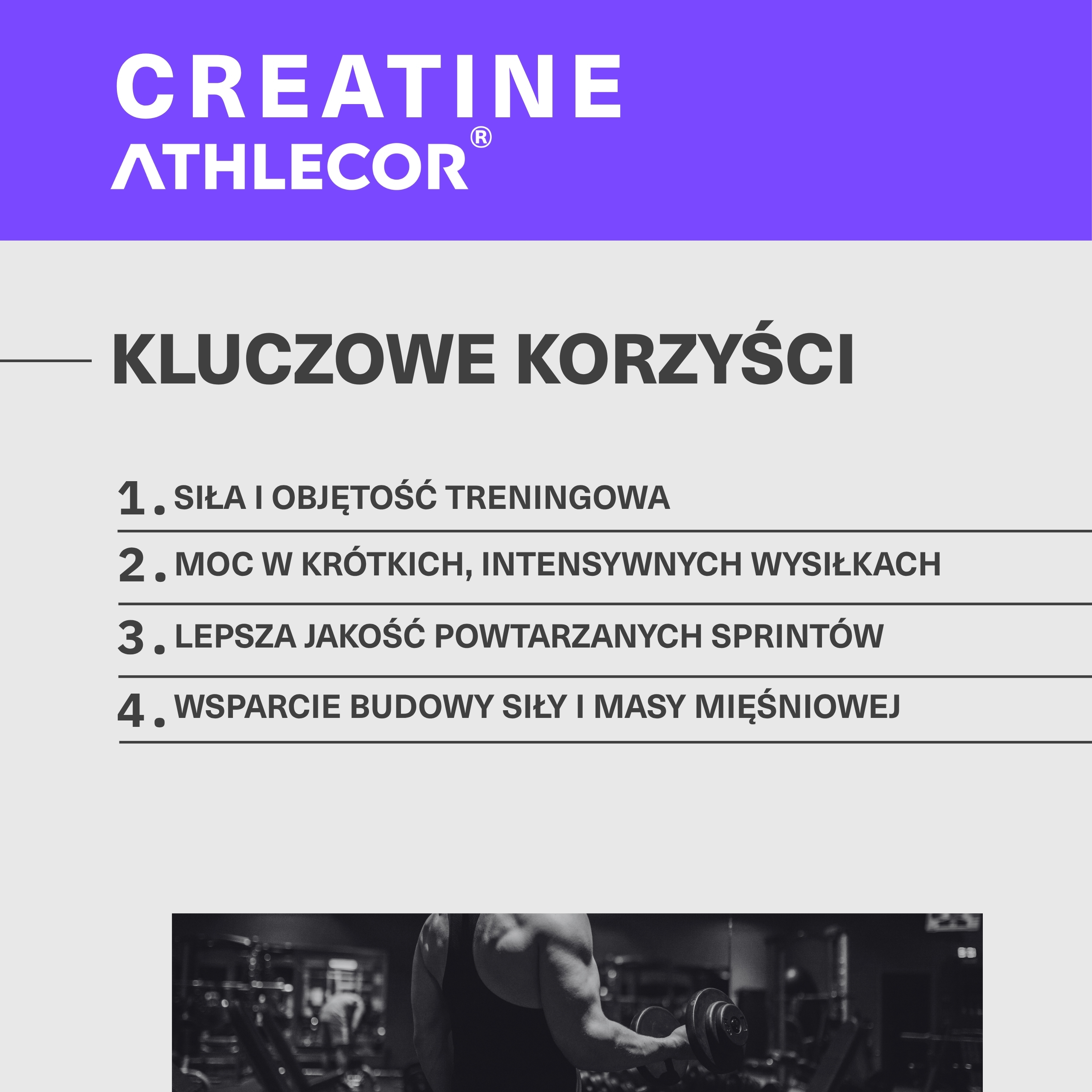
  • Siła i hipertrofia w treningu oporowym
    Combined with systematic strength training, creatine increases gains in strength, power and lean body mass. It's the best-documented application of the supplement in the whole sports literature.
  • Maksymalne wysiłki do 30 sekund
    Pojedyncze podejście siłowe, sprint, rzut, skok. Mięśnie pracują wtedy na fosfokreatynie, a kreatyna ten zasób powiększa, więc każde powtórzenie ma więcej rezerwy.
  • Powtarzane zrywy w sportach walki, grach zespołowych i rakietowych
    Druga i trzecia akcja w rundzie nie spadają na jakości tak szybko. Kreatyna nie wydłuża akcji, tylko utrzymuje jej poziom w kolejnych powtórzeniach przez szybszą odbudowę fosfokreatyny.
  • Mocniejsza odpowiedź u wegetarian i wegan
    Dieta roślinna dostarcza znacznie mniej kreatyny niż mięsna, więc mięśnie startują z poziomu o 20-30% niższego i reagują na suplementację silniej. Efekt widać szybciej i wyraźniej.
  • Protokół na lata, nie na sezon
    Bezpieczna w długotrwałej suplementacji (dane do 5 lat codziennego stosowania u osób zdrowych), nie wymaga cyklicznych przerw, nie traci skuteczności w czasie. Opakowanie pokrywa 60 dni protokołu.
  • Najwyższy standard surowcowy (Creapure®)
    Surowiec produkowany w Niemczech z niezależnymi audytami i powtarzalną czystością chemiczną. Ta sama, sprawdzona w badaniach klinicznych molekuła, bez znaków zapytania nad pochodzeniem partii.

Ingredients

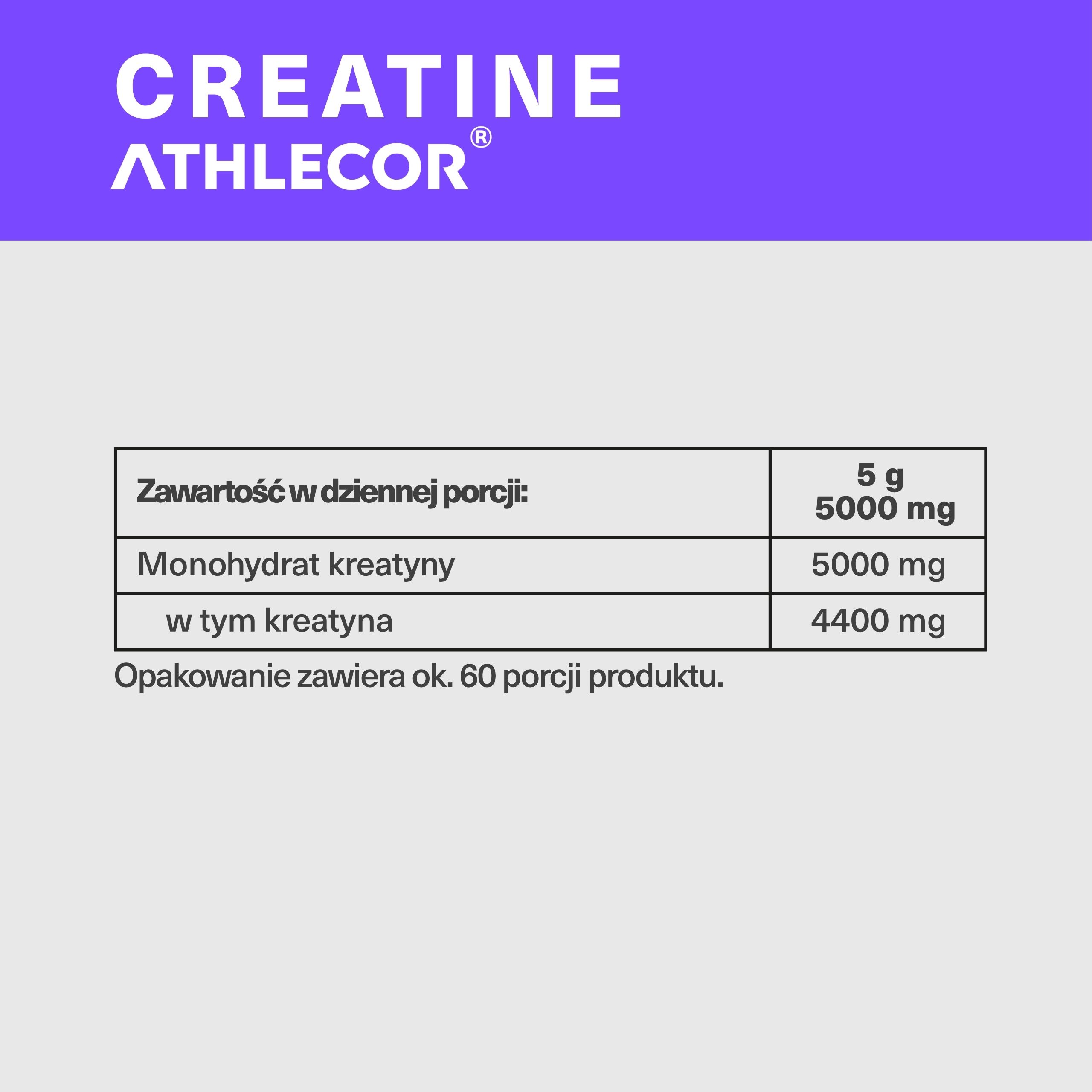
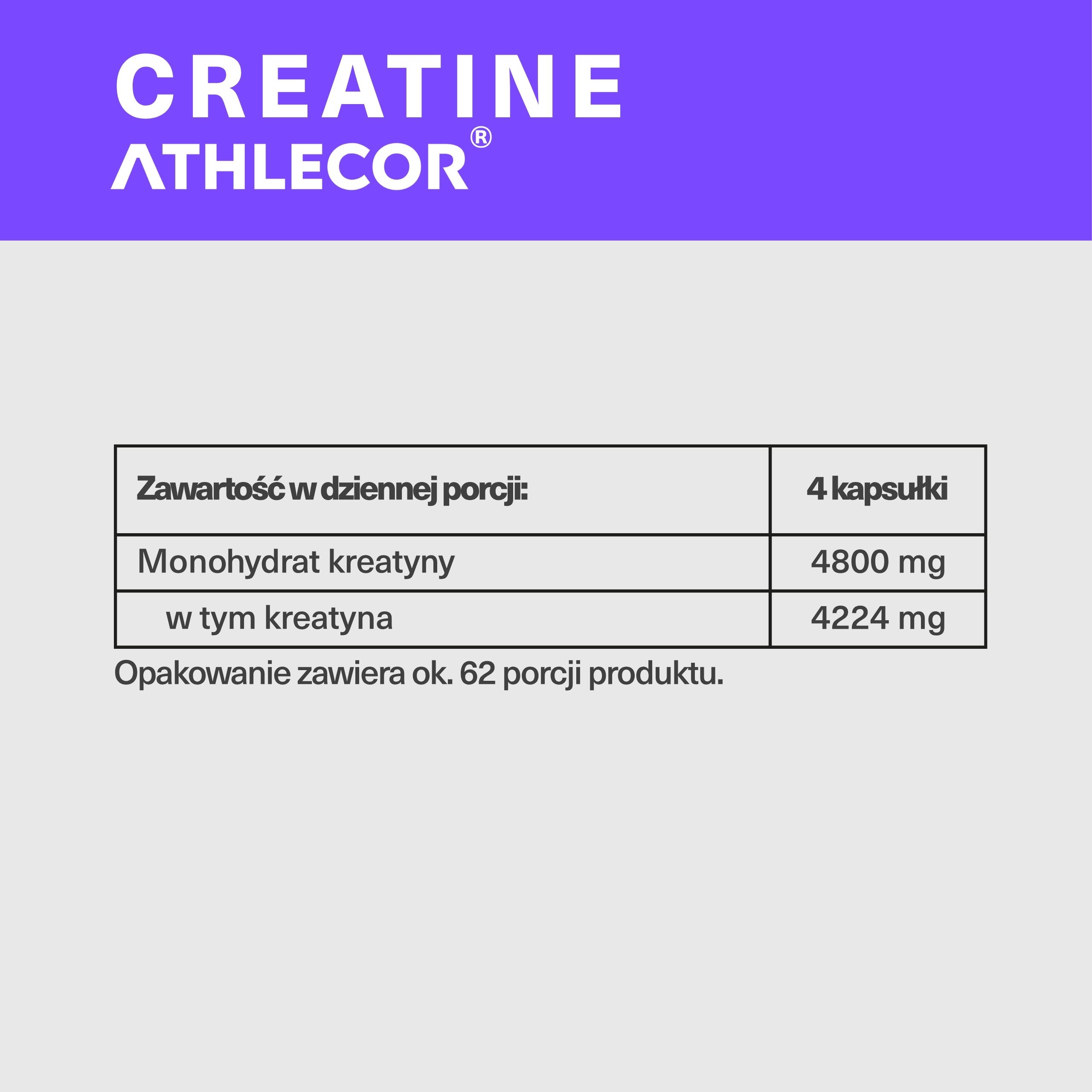
Ingredient Powder (5 g, 1 scoop) Capsules (4 units)
Creatine monohydrate 5000 mg 4800 mg
of which pure creatine 4400 mg 4224 mg

Recommended dosage

Two proven protocols, both leading to the same effect, differing in pace.

  1. Steady supplementation. 3 to 5 g of monohydrate daily throughout the period of use. Powder: 1 scoop. Capsules: 4 units. Full muscle saturation after 3 to 4 weeks.
  2. Loading and maintenance phase. Loading: 0.3 g/kg of body weight daily for 5 to 7 days, in 3 to 4 servings with meals (for a 70 kg person = 21 g). Maintenance: 3 to 5 g daily. Full saturation after 5 to 7 days. The loading phase in capsules is inconvenient (around 17 capsules daily), so for this protocol it's more practical to reach for the powder.

When is it best to take it

With a meal containing protein and carbohydrates. The rise in insulin after a meal improves creatine transport into the muscles. The time of day doesn't matter much, since creatine works through steady muscle saturation, not on the spot.

Daily, including on non-training days. No breaks, no cycles, no washout periods. The ISSN position statement covers safety data for up to 5 years of daily supplementation in healthy people.

Who is it for?

  • Trenujących siłowo i budujących masę mięśniową
    The best-documented application of creatine in the whole sports literature. Combined with systematic resistance training, supplementation leads to greater gains in strength, power and lean body mass than training alone.
  • Zawodników sportów siłowo-szybkościowych
    200 m sprints, throws, jumps, weightlifting, powerlifting. Efforts up to 30 seconds, in which the muscles work on phosphocreatine. Precisely the reserve that creatine increases.
  • Zawodników sportów z powtarzanymi zrywami
    Combat sports (rounds of 3 to 5 minutes with several maximal-intensity actions), team games (sprints and bursts in football, basketball, hockey), racket sports. Creatine doesn't lengthen the action, it maintains its quality in the second, third and fourth round.
  • Wegetarian i wegan
    Creatine occurs mainly in meat. People on a plant-based diet have a 20 to 30% lower baseline creatine level in the muscles, which translates into a stronger response to supplementation. For this group, the effect is visible faster and more clearly.
  • Osób powyżej 50 roku życia trenujących siłowo
    With age, muscle mass and creatine levels in the muscles naturally decline. Combined with regular resistance training, supplementation slows these processes and supports maintenance of muscle function.
  • Wracających do treningu po kontuzji lub unieruchomieniu
    Periods of forced inactivity (a cast, rehabilitation, a long break after injury) lead to a drop in mass, strength and creatine levels in the muscles. Supplementation in this period slows these declines, and after returning to training supports a faster return to baseline form.

How does Athlecor Creatine Creapure® work?

  • Mechanizm: fosfokreatyna i regeneracja ATP
    To contract, muscles need ATP. The store is enough for a few seconds of maximal effort, so the body has to regenerate ATP during work. The fastest regeneration system is phosphocreatine (PCr), which donates a phosphate to ADP in a few milliseconds and without oxygen. That makes it the key energy system for maximal efforts up to 30 seconds. The pioneering work of Harris (1992) showed that oral supplementation with creatine monohydrate increases intramuscular creatine and phosphocreatine stores by around 20 to 30%. The International Society of Sports Nutrition position statement (Kreider 2017) confirmed that this translates into a greater energy reserve in a single effort and faster PCr restoration between sets.
  • Okno wysiłkowe
    The phosphocreatine mechanism dominates in efforts of maximal intensity up to 30 seconds: a single strength action, sprint, throw, jump. The Lanhers meta-analysis (2017, creatine and strength in resistance training) documented a significant increase in muscle strength after systematic supplementation combined with strength training. In repeated efforts (a series of resistance training, actions in combat or team sports), creatine maintains the quality of work in successive reps by speeding up PCr regeneration during breaks. In efforts over a few minutes, where glycolysis and oxidative metabolism dominate, creatine no longer has an application.
  • Dynamika nasycenia
    Muscles have a limited capacity for storing creatine. The baseline level in people eating meat is around 120 mmol/kg of dry muscle mass, and the maximal level after supplementation is around 160 mmol/kg (Harris 1992). At a steady dose of 3 to 5 g daily, full saturation is reached in 3 to 4 weeks. With a loading phase (0.3 g/kg for 5 to 7 days), you reach the same ceiling in a week. The final level is identical, the difference is in the pace of getting there.
  • Bezpieczeństwo długoterminowe
    The ISSN position statement (Kreider 2017) covers safety data for up to 5 years of daily use in healthy people, with no negative influence on kidney markers or other health parameters. Antonio (2021) systematically dismantles myths about creatine, including false claims of kidney damage that rest on a misinterpretation of the rise in blood creatinine (creatinine rises as a result of increased creatine intake, not kidney damage). Creatine requires no cyclical breaks and doesn't lose effectiveness over the long term.

SCIENTIFIC RESEARCH

Monohydrat kreatyny ma za sobą ponad trzydzieści lat badań klinicznych. To najlepiej udokumentowany legalny suplement ergogeniczny, jaki istnieje, dlatego nie opisujemy go hasłami, tylko dowodami. Poniżej sześć kluczowych publikacji: dwa stanowiska eksperckie (International Society of Sports Nutrition i Międzynarodowy Komitet Olimpijski), dwie metaanalizy treningu oporowego i dwie prace przeglądowe. Przy każdej pozycji znajdziesz najpierw to, co wynika z niej dla Twojego treningu, a pod rozwinięciem pełną wersję naukową ze wszystkimi liczbami.

1Najmocniej udokumentowany legalny suplement na siłę, moc i beztłuszczową masę, z danymi bezpieczeństwa do 5 lat.

Kreider 2017, Journal of the International Society of Sports Nutrition. International Society of Sports Nutrition position stand: safety and efficacy of creatine supplementation in exercise, sport, and medicine.

Najważniejsze stanowisko branżowe podsumowuje dekady badań. Kreatyna zwiększa zasoby fosfokreatyny w mięśniach, co poprawia wysiłki o wysokiej intensywności i wspiera adaptacje treningowe, a monohydrat jest wskazany jako najlepiej przebadana i najskuteczniejsza forma. Dawki do 30 g dziennie stosowano przez 5 lat bez szkodliwego wpływu na zdrowie u osób zdrowych.

Source: Kreider, Richard B et al. “International Society of Sports Nutrition position stand: safety and efficacy of creatine supplementation in exercise, sport, and medicine.” Journal of the International Society of Sports Nutrition vol. 14 18. 13 Jun. 2017, doi:10.1186/s12970-017-0173-z
2Więcej siły w wyciskaniu i pracy nad górną częścią ciała, potwierdzone na 53 badaniach.

Lanhers 2017, Sports Medicine. Creatine Supplementation and Upper Limb Strength Performance: A Systematic Review and Meta-Analysis.

Metaanaliza 53 badań RCT pokazała, że suplementacja kreatyną zwiększa siłę w krótkich, intensywnych wysiłkach górnej części ciała, niezależnie od wieku, płci i stażu treningowego. Najbardziej spójne dane dotyczą wyciskania na ławce, gdzie wykonanie rosło średnio o około 5,3%.

Source: Lanhers, Charlotte et al. “Creatine Supplementation and Upper Limb Strength Performance: A Systematic Review and Meta-Analysis.” Sports medicine (Auckland, N.Z.) vol. 47,1 (2017): 163-173. doi:10.1007/s40279-016-0571-4

3Suplement z najwyższej półki dowodowej według Międzynarodowego Komitetu Olimpijskiego.

Maughan 2018, International Journal of Sport Nutrition and Exercise Metabolism. IOC Consensus Statement: Dietary Supplements and the High-Performance Athlete.

Stanowisko MKOl ocenia suplementy pod kątem jakości dowodów i bezpieczeństwa. Kreatyna monohydrat poprawia krótkie wysiłki o wysokiej intensywności, najwyraźniej trwające poniżej 30 sekund, i wspiera adaptacje treningowe: przyrost siły, mocy oraz beztłuszczowej masy ciała.

Source: Maughan, Ronald J et al. “IOC Consensus Statement: Dietary Supplements and the High-Performance Athlete.” International journal of sport nutrition and exercise metabolism vol. 28,2 (2018): 104-125. doi:10.1123/ijsnem.2018-0020

4Realne wsparcie hipertrofii, bez obietnic szybkich kilogramów mięśni.

Burke 2023, Nutrients. The Effects of Creatine Supplementation Combined with Resistance Training on Regional Measures of Muscle Hypertrophy: A Systematic Review with Meta-Analysis.

Metaanaliza 10 badań z bezpośrednim obrazowaniem mięśni (rezonans, tomografia, USG) wykazała mały, ale spójny wzrost masy mięśniowej po połączeniu kreatyny z treningiem oporowym. Autorzy oddzielają realny przyrost tkanki od wzrostu masy ciała związanego z retencją wody, co daje ostrożniejszy i uczciwszy obraz efektu.

Source: Burke, Ryan et al. “The Effects of Creatine Supplementation Combined with Resistance Training on Regional Measures of Muscle Hypertrophy: A Systematic Review with Meta-Analysis.” Nutrients vol. 15,9 2116. 28 Apr. 2023, doi:10.3390/nu15092116

5Potencjał poza mięśniami: funkcje poznawcze w warunkach zmęczenia i niedoboru snu.

Dolan 2019, European Journal of Sport Science. Beyond muscle: the effects of creatine supplementation on brain creatine, cognitive processing, and traumatic brain injury.

Praca przeglądowa omawia wpływ kreatyny na mózg i funkcje poznawcze. Korzyści są najbardziej prawdopodobne w sytuacjach stresu energetycznego dla mózgu, takich jak deprywacja snu, hipoksja czy duże obciążenie poznawcze. To obiecujący kierunek, w którym dane są jeszcze wstępne i wymagają dalszych badań.

Source: Dolan, Eimear et al. “Beyond muscle: the effects of creatine supplementation on brain creatine, cognitive processing, and traumatic brain injury.” European journal of sport science vol. 19,1 (2019): 1-14. doi:10.1080/17461391.2018.1500644

6Najczęstsze obawy o kreatynę, skonfrontowane z danymi.

Antonio 2021, Journal of the International Society of Sports Nutrition. Common questions and misconceptions about creatine supplementation: what does the scientific evidence really show?

Przegląd odpowiada na pytania, które słyszy każdy rozważający kreatynę: woda, nerki, wypadanie włosów, faza ładowania, stosowanie u kobiet i osób starszych. Wniosek autorów jest jednoznaczny: przy dawkach 3-5 g dziennie kreatyna jest dobrze tolerowana, a większość obaw nie znajduje potwierdzenia w danych.

Source: Antonio, Jose et al. “Common questions and misconceptions about creatine supplementation: what does the scientific evidence really show?.” Journal of the International Society of Sports Nutrition vol. 18,1 13. 8 Feb. 2021, doi:10.1186/s12970-021-00412-w

WHAT TO KNOW ABOUT CREATINE CREAPURE®. CREATINE MONOHYDRATE POWDER/CAPSULES

Find answers to key questions about this product.


Does creatine retain water and cause "bloating"?

Yes, but inside the muscles, not under the skin. Creatine is osmotically active and enters muscle cells through a sodium-dependent transporter, drawing water in with it to maintain osmotic balance. That's the main mechanism. Additionally, supplementation supports glycogen synthesis in the muscles, and glycogen also binds water (around 3 g of water per 1 g of glycogen), which adds to intracellular hydration. In the first 1 to 2 weeks, body weight may rise by 0.5 to 2 kg.

Does creatine harm the kidneys or liver?

In healthy people, no. The ISSN position statement (Kreider 2017) covers data from supplementation of up to 30 g daily for 5 years with no negative influence on kidney or liver markers. The myth of harm stems from the fact that one of the kidney function markers, creatinine, rises with supplementation. This isn't damage, just the normal effect of increased creatine intake in the diet. With kidney or liver disease, in pregnancy and while breastfeeding, it's worth consulting a doctor about supplementation.

Does creatine cause cramps, dehydration or injuries?

Research doesn't confirm these concerns. The ISSN position statement (2017) directly rejects evidence that creatine increases the risk of muscle cramps, dehydration or electrolyte disturbances in healthy people. In some studies, athletes using creatine were observed to have even fewer cramps and injuries than control groups. As standard, it's still worth paying attention to fluid intake, especially during intense training.

Which form of creatine is best?

Monohydrate. This isn't a matter of marketing, but of scientific consensus. The ISSN position statement names monohydrate as the best-researched and most effective form of creatine currently available. Other forms (hydrochloride, malate, ethyl ester) are more expensive and show no advantage in research. Producers' claims of "better absorption" of alternative forms haven't been scientifically confirmed.

Powder or capsules, which form is better?

From the perspective of effectiveness, identical. The choice depends on lifestyle and daily routine. Capsules are more convenient at work, while travelling, at training away from home, require no scoop and are flavourless.

Do you need to do a loading phase?

No. The loading phase isn't necessary, it only serves to speed up the moment of reaching full muscle saturation. A steady dose of 3 to 5 g daily leads to full saturation in 3 to 4 weeks. The loading phase (0.3 g/kg of body weight for 5 to 7 days in 3 to 4 servings) shortens this time to a week, after which you switch to a maintenance dose of 3 to 5 g daily. The final saturation level is identical in both protocols.

How long do you have to wait for effects?

At a steady dose of 3 to 5 g daily, you reach full muscle saturation with creatine in 3 to 4 weeks. The first subjective changes (faster recovery between sets, less fatigue in successive reps) usually appear after 2 to 3 weeks. A measurable improvement in gym results comes after 4 to 6 weeks of systematic training combined with supplementation. The loading phase shortens this time to a week, but the final effect is identical.

When is it best to take creatine, before or after training?

The most important thing is to take it daily. The time of day is of secondary significance, since creatine works through steady muscle saturation, not on the spot. For many people it's most convenient to take it after training with a meal or a protein shake, because the rise in insulin after a meal increases creatine transport into the muscles. On non-training days, any time of day works, as long as it's with a meal.

Do you need to do creatine "cycles" and breaks?

No. Creatine doesn't exhaust its effectiveness, doesn't cause receptor desensitisation, and doesn't require cyclical washout. The ISSN position statement covers safety data from daily supplementation of up to 5 years in healthy people. Breaks give no documented favourable effect. They're done mainly for practical reasons, for example in sports with weight categories, when every kilogram of mass matters.

How long does the effect last after stopping?

After stopping, the creatine level in the muscles gradually drops and returns to baseline values within around 4 to 6 weeks. Along with it, the increase in body weight resulting from intracellular water retention reverses. It's a gradual and harmless process, with no "withdrawal" effect known from other supplements.

Should people on a plant-based diet take creatine?

Yes, it's one of the best target groups for creatine. Creatine occurs naturally mainly in meat (beef, pork, fish), so people on a plant-based diet have a 20 to 30% lower baseline creatine level in the muscles. Supplementation at the standard dose of 3 to 5 g daily makes up this shortfall, and the effect is often visible faster and more clearly than in people eating meat.

Can creatine be combined with other supplements?

Yes, creatine has several well-documented synergies. Whey protein (WPI) supports muscle mass combined with resistance training. Beta-alanine works in a different exercise window (30 s to 10 min) than creatine (up to 30 s), so the two supplements are naturally complementary. Carbohydrates after training increase creatine transport into the muscles via an insulin spike. There are no known unfavourable interactions with other sports supplements at standard doses.

ADD YOUR PRODUCT REVIEW

Dbamy o wiarygodność opinii, dlatego może je dodać wyłącznie osoba, która dokonała zakupu.
Każda opinia jest weryfikowana pod kątem potwierdzenia transakcji.

ADD REVIEW

FREQUENTLY BOUGHT TOGETHER

The foundation layer of the system. Daily ingredients essential for maintaining optimal health, immunity and metabolism.

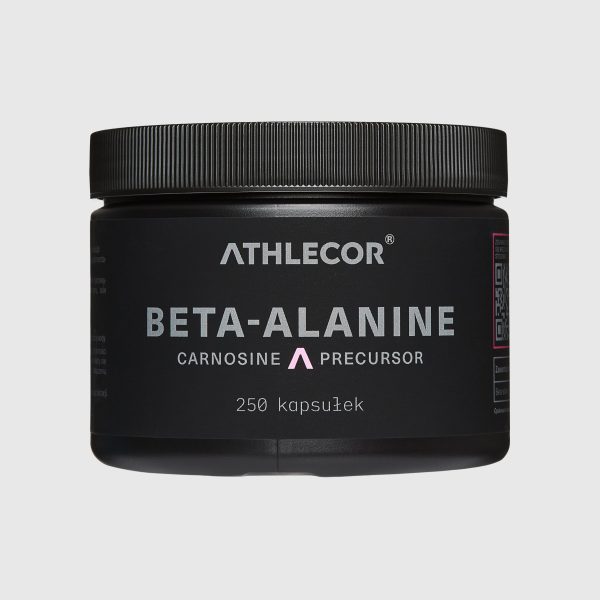
BETA-ALANINE. BETA-ALANINA W KAPSUŁKACH

BETA-ALANINE. CARNOSINE PRECURSOR

  • Beta-alanine increases muscle carnosine levels, supporting high-intensity work.
  • Most useful in efforts lasting from 30 seconds to 10 minutes.
  • The capsule form makes regular supplementation easier and allows convenient splitting of the daily dose during the loading phase.
99,00 
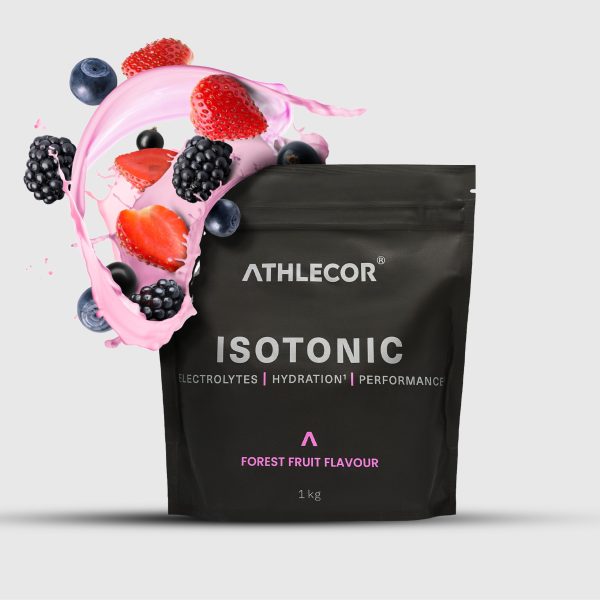
ISOTONIC. NAPÓJ IZOTONICZNY

ISOTONIC. HYDRATION DRINK

  • Optimal osmolality (~280 mOsm/kg) supports rapid hydration during effort.
  • 2:1 carbohydrate blend (glucose and fructose) effectively delivers energy during training and competition.
  • A refined flavour makes the prepared drink work well during longer training sessions without becoming tiresome with regular use.
79,00 
PEAK — pakiet ATHLECOR: Sodium Bicarbonate i Beta-Alanine

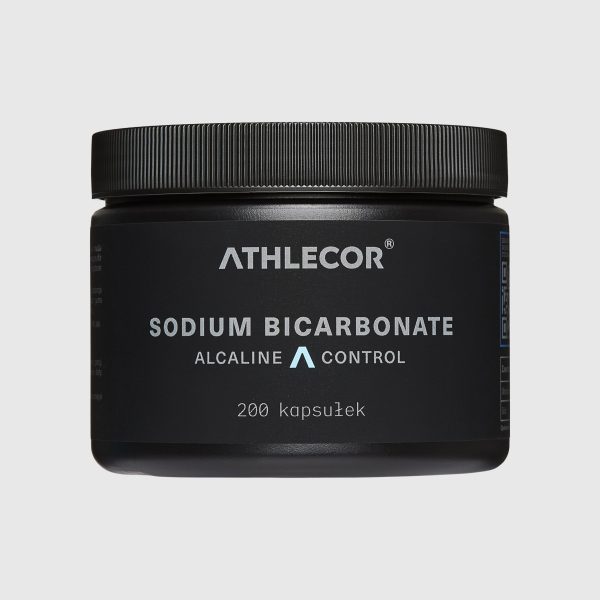
SODIUM BICARBONATE. ALCALINE CONTROL

  • The most effective hydrogen ion buffer in sport, irreplaceable in high-intensity efforts lasting around 1-10 minutes and in sports involving repeated efforts.
  • The enteric capsule releases the active ingredient only in the intestine, which helps reduce the risk of gastrointestinal discomfort associated with standard sodium bicarbonate supplementation.
  • 1200 mg of sodium bicarbonate in a compact size.
129,00 
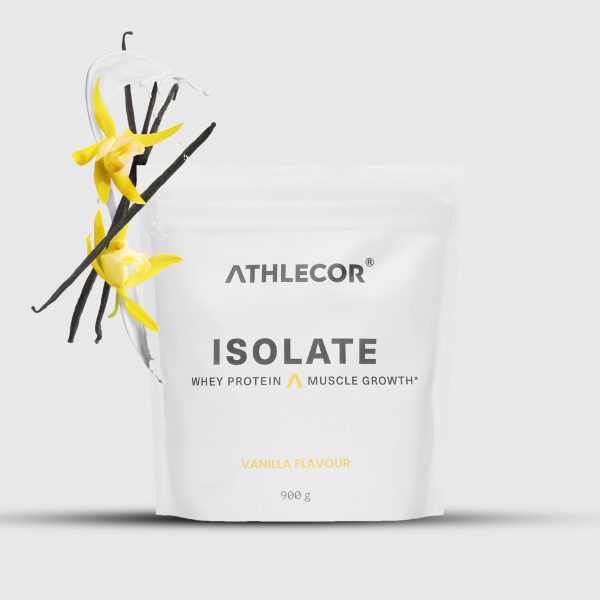
WHEY PROTEIN ISOLATE. IZOLAT BIAŁKA SERWATKOWEGO

WHEY PROTEIN ISOLATE

  • High-quality WPI with low sugar and fat content for those who want better control over their diet.
  • Complete protein supports the growth and maintenance of muscle mass and bone health.
  • Short formula (5 ingredients), subtle flavours that taste great even long-term.
219,00 

PRZESUWAJ GRANICE
Z NAUKOWĄ PRECYZJĄ

Stworzyliśmy unikatowy algorytm, który pozwoli nam poznać Ciebie i Twoje sportowe oczekiwania. Przygotuj się na spersonalizowane rozwiązania, które zmienią sposób, w jaki myślisz o suplementacji.

ROZWIĄŻ TEST I DOKONAJ ZAKUPU